Textile and industrial supply chains are under growing pressure to reduce their use of virgin raw materials. This shift is supporting demand for recycled polyester staple fiber, a versatile material made from recovered PET waste.
Also known as RPET staple fiber, it is used in textiles, bedding, furniture, nonwovens, automotive parts, insulation, and geotextiles. Yet sustainability alone does not drive purchasing decisions. Buyers also consider performance, traceability, availability, price, and technical specifications.
This guide examines the leading demand drivers, regional sourcing trends, common applications, production methods, pricing factors, and supplier selection criteria.
What Is Driving Global RPET Staple Fiber Demand?
Corporate Recycled-Content Targets
Brands and manufacturers are setting targets to use more recycled materials. These commitments affect the full supply chain, from yarn and fabric producers to bedding, furniture, automotive, and nonwoven companies.
However, buyers want more than a general recycled-content claim. Many now request valid certificates, transaction records, batch reports, and clear chain-of-custody documents. This makes traceability a key part of commercial value.
Circular-Economy Policies
Governments are paying closer attention to textile waste, eco-design, recycling, and producer responsibility. The European Commission’s strategy for sustainable and circular textiles is one example of this broader policy direction.
Rules vary between countries and product groups. Exporters must therefore check the chemical, labeling, waste, and product requirements of each destination market.
Performance Beyond Sustainability
Recycled PET fiber can provide durability, low moisture absorption, resilience, and lightweight insulation. It can also be engineered for filling, spinning, thermal bonding, needle punching, and other processes.
Where Is Demand Growing?
Asia-Pacific: Production and Export Activity
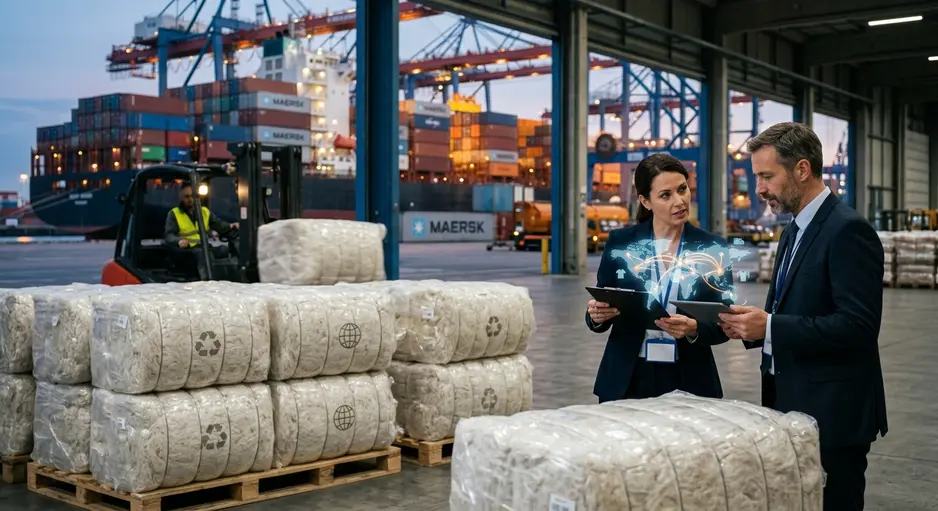
Asia-Pacific is a major production and consumption region because of its large textile, home-furnishing, automotive, and nonwoven industries. India, China, and Southeast Asian countries play important roles in processing PET waste and producing finished fiber.
International buyers often search for a recycled polyester staple fiber manufacturer in India due to the country’s textile base, recycling activity, product range, and access to export ports. Each producer must still be assessed on its own quality systems, specifications, documentation, and delivery record.
Europe: Traceability and Compliance
European demand is shaped by circular-textile policies and brand commitments. Buyers may place greater weight on recycled-content verification, chemical compliance, supply-chain transparency, and certification scope.
A supplier that provides clear records and repeatable quality may be better placed to serve this market. Certification should never be assumed. Buyers should verify certificate validity, covered products, facility details, and transaction documents.
North America: Furnishing and Technical Uses
Demand in North America comes from bedding, furniture, acoustic panels, automotive insulation, filtration, and other technical products. Product consistency and dependable shipment schedules are important, especially for manufacturers with continuous production lines.
Emerging Regional Opportunities
The Middle East, Africa, and Latin America offer opportunities in mattresses, furnishings, infrastructure, textiles, and nonwoven fabric manufacturing. Actual demand can differ by country, so current customs and trade data should be checked before entering a market.
Trade analysis also requires care. Recycled PSF may not always have a customs classification that separates it from other polyester staple fibers.
Applications Creating Global Demand
Textiles and Blended Yarns
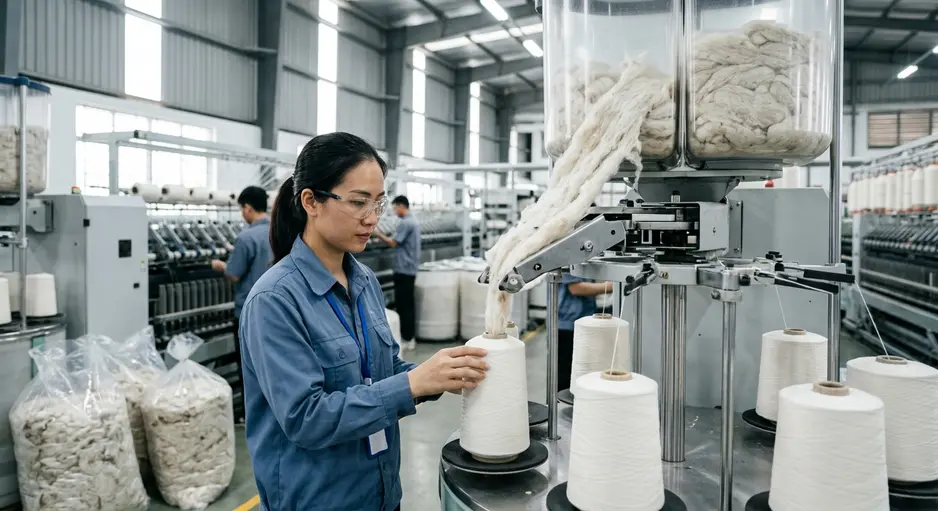
Premium recycled polyester staple fiber for the textile industry is used in spun yarns, blended fabrics, furnishings, apparel, and industrial textiles. Fiber may be blended with cotton, viscose, or other materials to reach a desired feel and performance level.
Spinners often assess tenacity, elongation, color, contamination, finish, and cut-length consistency. Even small variations can affect processing efficiency and the appearance of finished yarn.
Pillow and Cushion Filling
Hollow conjugated fiber is widely used as a textile filling material. Its structure helps create loft, softness, insulation, and compression recovery. Common end uses include pillows, cushions, comforters, mattresses, toys, and padded furniture.
Siliconized fiber usually offers a smoother and softer feel. Non-siliconized grades may be selected when a different surface grip, bonding behavior, or cost level is required. Buyers should test the material in the final product rather than judge it by hand feel alone.
Nonwoven Applications
Recycled polyester staple fiber for nonwoven applications can be used in needle-punched, air-laid, and thermal-bonded materials. Products include wadding, filtration media, insulation, padding, protective layers, and acoustic panels.
Denier, cut length, crimp, finish, and thermal behavior must suit the production process. Uniform fiber helps reduce web defects and improves consistency across finished rolls.
Automotive Insulation
Automotive insulation fiber is used in trunk liners, interior padding, under-carpet layers, thermal barriers, and sound-absorbing parts. Low weight, resilience, and acoustic performance make polyester useful for these components.
An automotive processor may focus on density and sound absorption. In contrast, a bedding producer may give more weight to softness, loft, and recovery after compression.
Geotextile and Construction Uses
Geotextile fiber applications include drainage, separation, erosion control, and ground stabilization. Solid polyester staple fiber is often considered for needle-punched technical fabrics and related construction products.
Suitability depends on tensile strength, durability, dimensions, site conditions, and the design standard. Application-level testing is essential before material is approved for civil engineering work.
What Determines Recycled Polyester Staple Fiber Price?
PET Flake Quality and Availability
Feedstock is a major cost factor. Bottle collection rates, flake color, contamination, washing quality, sorting efficiency, and competition for recovered PET can all affect pricing.
Clean, well-sorted flakes usually support better color and more stable processing. Extra filtration and quality control may be needed when the feedstock contains labels, adhesives, metals, or mixed polymers.
Fiber Specifications
The final quote will vary according to the required product. Key variables include:
- Solid, hollow, or conjugated construction
- Denier and cut length
- Virgin white, optical white, black, or colored fiber
- Siliconized or non-siliconized finish
- Tenacity, elongation, and crimp requirements
- Moisture and contamination limits
- Bale weight and packaging format
Certification, Volume, and Freight
Certification, testing, and traceability add value but may also add cost. Order volume, frequency, container utilization, delivery terms, insurance, duties, energy prices, and currency movements can change the landed price.
Buyers comparing recycled polyester staple fiber price should request quotations against the same specification and Incoterm. Otherwise, a lower quote may reflect different quality limits, packaging, documentation, or freight terms.
Virgin vs Recycled Polyester Fiber
Recycled material is not always cheaper than virgin material. High-purity feedstock, specialized processing, certification, and complete traceability can create a premium. Price comparisons should include production performance, waste rates, consistency, and compliance risks.
How Is Recycled Polyester Staple Fiber Made?
From PET Waste to Clean Flakes
The answer to how recycled polyester staple fiber is made begins with collection and sorting. PET bottles or other suitable PET waste are separated from unwanted materials. Labels, caps, metals, dirt, and contaminants are removed.
The PET is then crushed, washed, dried, and inspected. Flake cleanliness and color have a direct effect on processing stability and final fiber quality.
Extrusion, Drawing, and Cutting
Clean flakes are melted and filtered. The polymer then passes through spinnerets to form continuous filaments. These filaments are cooled, drawn, crimped, heat-set, and cut into specified lengths.
Finishing treatments may be applied for softness, lubrication, bonding, or filling performance. The process can create solid fiber or hollow products for different end uses.
Solid and Hollow Fiber
Solid fiber is commonly used in spinning, nonwovens, geotextiles, and technical materials. Hollow fiber contains internal air spaces and is often chosen for cushioning and insulation. The right option depends on the production method and desired finished-product performance.
What Does GRS Certification Mean?
The Global Recycled Standard, managed by Textile Exchange, covers recycled-content verification and chain-of-custody requirements. It also includes social, environmental, and chemical-processing criteria.
When purchasing GRS-certified recycled fiber, buyers should verify the facility, product scope, certificate dates, and transaction documentation. A general reference to GRS does not prove that every shipment or product is covered.
How Should Buyers Choose a Global Supplier?
Define the Application First
A recycled polyester staple fiber supplier cannot recommend the correct grade without knowing the end use. A clear request for quotation should include:
- Application and processing method
- Fiber type, denier, and cut length
- Solid, hollow, or conjugated structure
- Siliconized or non-siliconized finish
- Color and permitted tolerance
- Tenacity, elongation, crimp, and moisture limits
- Bale weight, order volume, and monthly demand
- Destination port and preferred Incoterm
Assess Manufacturing Capability
Ask whether production is in-house or outsourced. Confirm which batch tests are carried out and whether representative samples are available. Buyers should also review lead times, complaint procedures, quality records, and the ability to repeat an approved specification.
A reliable recycled polyester staple fiber manufacturer should be willing to discuss measurable limits rather than use broad terms such as “high quality.” Written tolerances reduce the risk of disputes after delivery.
Check Import-Export Experience
An international recycled polyester staple fiber supplier should understand export packaging, container loading, commercial invoices, packing lists, certificates of origin, and bills of lading. Destination-specific documents may also be required.
For recycled polyester staple fiber import export orders, confirm who is responsible for freight, insurance, customs clearance, duties, and local compliance. These details should be agreed upon before production begins.
Test Before Ordering in Bulk
Before selecting a bulk recycled polyester staple fiber exporter, request a representative sample and conduct a production trial. Agree on the approved sample, test methods, and tolerances in writing.
A controlled first order can reveal issues that a small laboratory sample may not show. Third-party inspection may also be useful for high-value or technically demanding shipments.
Global Market Outlook
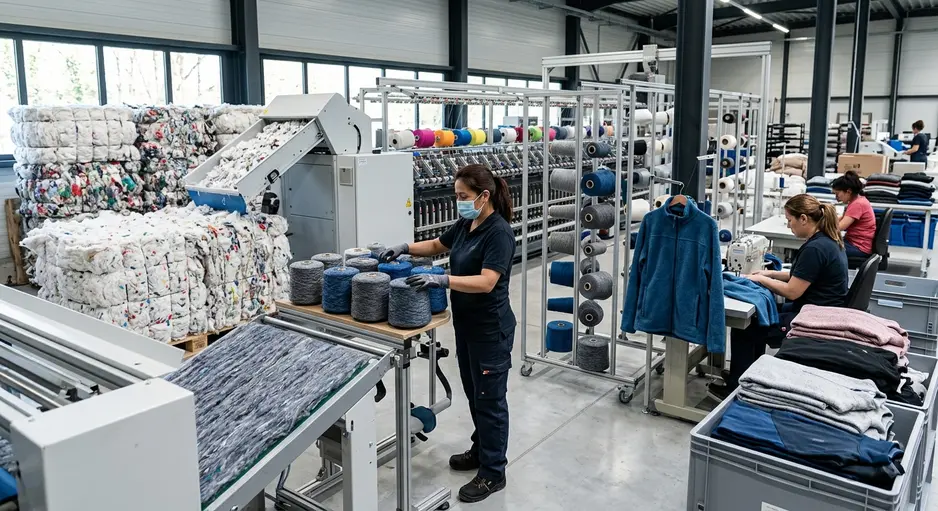
The recycled polyester staple fiber global market is likely to become more specification-driven. Buyers will compare traceability, quality consistency, application performance, technical support, and delivery reliability alongside price.
Bottle-based RPET remains an important feedstock source. At the same time, the industry is exploring textile-to-textile recycling. This route could keep more textile waste in circulation, but blends, dyes, finishes, contamination, and fiber degradation create technical challenges.
Long-term opportunities will favor suppliers that make clear recycled-content claims and provide dependable documentation. Flexible product development and stable export service will also matter as buyers seek grades for more specialized uses.
Global Demand Trends for Recycled Polyester Staple Fiber
Conclusion
Global demand is being shaped by sustainability targets, circular-economy policies, technical applications, and the need for traceable materials. Yet purchasing decisions still come down to practical factors: consistent performance, clear specifications, reliable documents, fair commercial terms, and on-time delivery.
For buyers, the best approach is to define the end use, compare identical specifications, test samples, and verify every recycled-content claim. Manufacturers and exporters that combine circularity with measurable quality will be best placed to serve the next stage of market growth.
Looking for bulk RPET staple fiber? Contact Saheb Fibre through sahebfibre.com to request details about available grades, technical specifications, documentation, minimum order quantities, lead times, and export terms.
Frequently Asked Questions
1. What is recycled polyester staple fiber?
It is a short-length synthetic fiber made from recycled PET. It is used in yarn spinning, filling, nonwovens, furniture, automotive parts, insulation, geotextiles, and acoustic products.
2. Is recycled polyester as durable as virgin polyester?
It can provide strong and durable performance, but results depend on feedstock quality, filtration, production control, fiber specifications, and end use. Buyers should compare test data and complete application trials.
3. Is recycled polyester moisture-resistant?
Polyester absorbs relatively little moisture compared with many natural fibers. However, the performance of a moisture-resistant polyester fiber product also depends on its structure, finish, density, and surrounding materials.
4. Is recycled polyester always more sustainable?
It can reduce demand for virgin polyester and give PET waste another use. The total impact still depends on collection, washing, energy, transport, product life, and end-of-life options. Peer-reviewed life-cycle studies should be used for detailed comparisons.
5. Is recycled fiber always cheaper?
No. Feedstock quality, market supply, energy, certification, processing, freight, and technical requirements affect the final cost. Certified or highly specialized grades may cost more than standard virgin fiber.