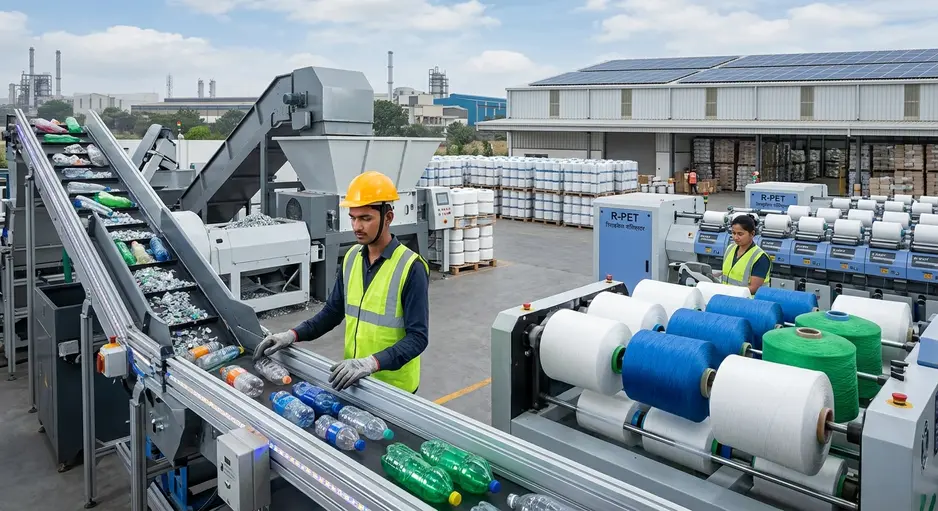
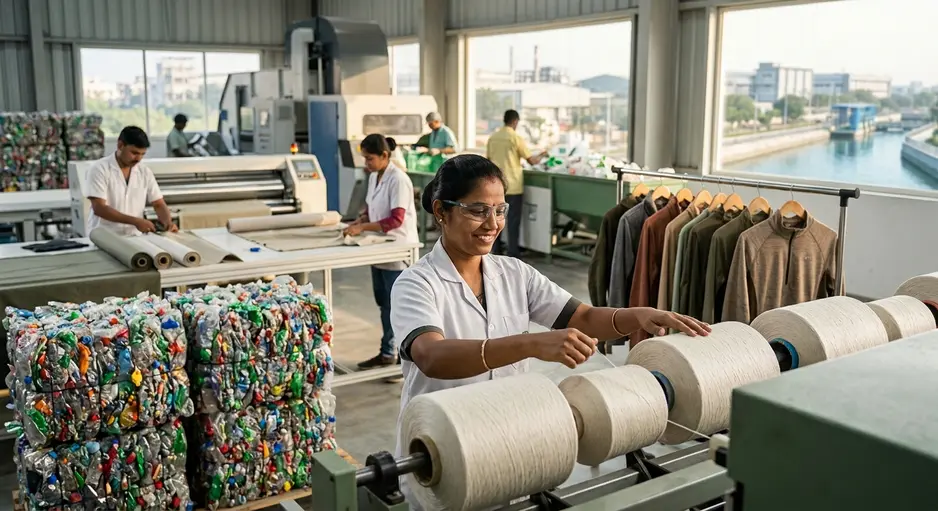
The recycled polyesters industry in India is entering a strong growth phase in 2026. At its core, recycled polyester often called rPET fiber is made from post-consumer PET waste like plastic bottles and packaging. This process supports a circular economy by turning waste into usable raw material.
Between 2024 and 2026, the recycled polyester market in India 2026 is expected to expand steadily. Growth is driven by sustainability goals, rising export demand, and wider use across textiles, packaging, and construction. Industries are shifting away from virgin polyester due to both environmental pressure and long-term cost benefits.
India is also seeing a shift toward circular economy polyester, where waste is reused across supply chains. This change is not just policy-driven but also market-led, as brands and manufacturers align with global sustainability standards.
Overview of the Recycled Polyester Market in India 2026
Key Growth Drivers Fueling rPET Fiber Demand in India
Government Regulations and Sustainability Push
Government policies are a major force behind the growth of recycled PET. India’s rules and plastic waste management policies require businesses to reuse and recycle plastic waste.
-
Mandatory recycling targets for plastic producers
-
Increased focus on ESG compliance
-
Support for green manufacturing initiatives
These policies encourage industries to adopt rpet certified suppliers in India and build greener supply chains.
Rising Demand from Textile & Packaging Industries
The textile sector is one of the largest consumers of recycled polyester yarn India. Apparel brands and home textile manufacturers are shifting toward recycled inputs to meet sustainability commitments.
At the same time, packaging innovation is gaining attention. Eco-friendly ceramic tile packaging and rpet tile backing material in India are becoming popular among tile exporters. These solutions reduce plastic waste while maintaining durability.
Export Opportunities and Global Demand
India has emerged as a key supplier in the global recycled polyester supply chain. Many businesses now export rpet fiber from India to EU and US markets, where sustainability standards are strict.
-
Compliance with GRS and OEKO-TEX certifications
-
Growing demand for traceable recycled materials
-
Strong logistics and manufacturing base
Growth in Construction & Industrial Applications
Beyond textiles, rpet fiber applications in construction and tiles are expanding. Builders use recycled polyester in insulation, flooring systems, and reinforcement materials.
This shift supports the rise of sustainable building materials India, especially in large-scale infrastructure and commercial projects.
rPET Fiber Market Outlook India 2026
Demand Forecast and Consumption Trends
The rpet demand forecast 2026 in India shows steady growth across sectors. Textile and packaging industries remain dominant, but construction and industrial use cases are catching up.
Increasing awareness of environmental impact is pushing businesses to adopt recycled alternatives. This trend is expected to continue beyond 2026.
Pricing Trends and Cost Comparison
Recycled polyester pricing in India 2026 remains competitive when compared to virgin polyester. While prices can fluctuate based on raw material supply, rPET often offers long-term savings.
-
Lower environmental cost
-
Reduced dependence on crude oil
-
Stable pricing in regulated markets
The rpet vs virgin polyester environmental impact also favors recycled options, as rPET significantly reduces carbon emissions and energy use.
Investment Trends in Recycling Infrastructure
India is seeing increased investment in rpet recycling plants investment. Both private players and government-backed initiatives are expanding recycling capacity.
Advancements in polyester recycling technology in India are improving efficiency and output quality. This is critical for meeting both domestic and export demand.
Key Applications of Recycled Polyester in Emerging Industries
Textile and Apparel Industry
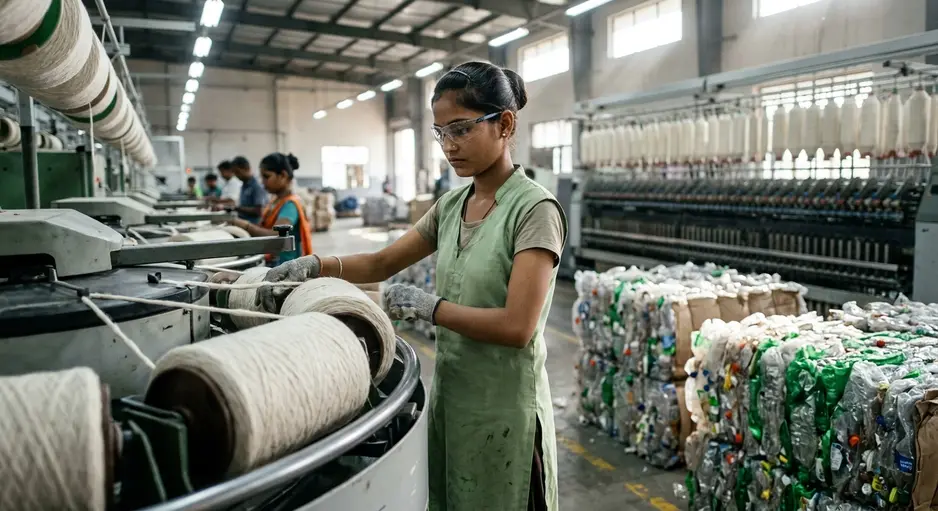
The textile sector remains the backbone of the recycled polyester manufacturers in India ecosystem. From sportswear to home furnishings, rPET yarn is widely used.
There is also strong demand in the rpet yarn bulk wholesale in India market, especially from export-oriented manufacturers.
Ceramic Tile Industry and Packaging Solutions
The ceramic tile industry is exploring innovative uses of recycled materials. rpet for ceramic tile packaging solutions offers strength, flexibility, and sustainability.
Manufacturers are also adopting sustainable packaging for ceramic tiles rPET to reduce environmental impact and meet global buyer expectations.
Reliable rpet fiber suppliers for tile manufacturers play a key role in ensuring consistent quality and supply.
Construction and Industrial Use Cases
rPET filament for industrial use is gaining traction in multiple sectors. It is used in:
-
Flooring and insulation systems
-
Reinforcement materials
-
Acoustic panels
These applications highlight the versatility of rpet end-use applications construction flooring and industrial design.
Challenges Facing the Recycled Polyester Market in India
Supply Chain and Raw Material Constraints
One major issue is the limited availability of high-quality post-consumer rPET. Inefficient waste collection and segregation systems affect supply consistency.
Price Volatility and Competition with Virgin Polyester
Fluctuating crude oil prices impact the cost of virgin polyester, which in turn affects rPET pricing. Some manufacturers still prefer cheaper alternatives when margins are tight.
Quality Standardization and Certification Issues
Not all suppliers meet global standards. The lack of uniform quality in recycled polyester textile waste recycling creates trust issues among buyers.
This makes it important to work with rpet certified suppliers in India for consistent quality.
rPET Fiber Suppliers and Exporters in India
Leading rPET Fiber Suppliers India B2B
The supplier ecosystem in India includes both large integrated manufacturers and specialized producers. Companies with strong quality control and consistent output dominate the B2B space.
Bulk rPET Fiber Exporters from India
Bulk rpet fiber exporters from India benefit from strong logistics networks and access to raw materials. Export hubs are growing rapidly to meet international demand.
Choosing the Right rPET Supplier
When selecting a supplier, businesses should consider:
-
Certifications such as GRS
-
Production capacity and scalability
-
Consistency in fiber quality
-
Experience in export markets
Trusted manufacturers like those featured on Saheb Fibre offer reliable supply and industry expertise for global buyers.
Best Practices for Businesses Adopting rPET Solutions
Building a Green Supply Chain for Exporters
Green supply chain exporters in India strategies include sourcing sustainable materials, reducing waste, and improving logistics efficiency.
Sustainable Product Design Using rPET
Sustainable product design rPET focuses on durability, recyclability, and reduced environmental impact. Lifecycle assessments help measure long-term benefits.
Partnering with Reliable Manufacturers
Choosing experienced recycled polyester yarn manufacturers India ensures consistent quality and long-term supply stability.
Choose Sustainable Recycled Polyester
Conclusion
India is well-positioned to become a global leader in recycled polyester. With strong manufacturing capabilities, policy support, and growing demand, the country is building a robust circular economy.
Innovation in recycling technology and increased investment will further strengthen India’s position. Export opportunities will continue to expand, especially in regulated markets.
The recycled polyester market India 2026 reflects a clear shift toward sustainability and innovation. As industries adopt greener practices, recycled polyesters will play a central role in shaping the future of manufacturing, packaging, and construction in India.
FAQs
1. What is rPET fiber and how is it made?
rPET fiber is made by recycling PET plastic waste. The process involves cleaning, melting, and re-spinning plastic into usable fibers.
2. Why is recycled polyester gaining popularity in India?
It helps reduce plastic waste, lowers carbon emissions, and meets global sustainability standards, making it a preferred choice across industries.
3. What is the growth rate of recycled polyester market India 2026?
The market is expected to grow steadily with increasing adoption across textiles, packaging, and construction sectors.
4. How is rPET used in ceramic tile packaging?
It is used for protective packaging and backing materials, offering strength and eco-friendly benefits.
5. What are the environmental benefits of rPET vs virgin polyester?
rPET reduces plastic waste, lowers carbon emissions, and supports sustainable resource use.
6. Is rPET cheaper than virgin polyester in 2026?
In many cases, rPET is cost-competitive. While prices vary, long-term environmental and regulatory benefits make it a strong alternative.
7. What industries use recycled polyester in India?
Textiles, packaging, construction, automotive, and flooring industries widely use recycled polyester.
8. How can businesses source bulk rPET fiber in India?
Businesses can partner with certified suppliers, exporters, and manufacturers offering bulk supply and consistent quality.