Industrial buyers need materials that offer reliable performance, steady color, and a lower dependence on virgin resources. Colored recycled polyester fiber meets these needs across textiles, automotive parts, home furnishings, nonwovens, geotextiles, filtration, and insulation.
This material is generally made from recycled PET and supplied in a chosen shade, denier, cut length, and fiber structure. In dope-dyed production, color is added during melt processing. This may remove the need for a separate wet-dyeing stage. However, final performance depends on the fiber specification and finished-product tests, not recycled content alone.
What Is Colored Recycled Polyester Fiber?
From Recycled PET to RPET Staple Fiber
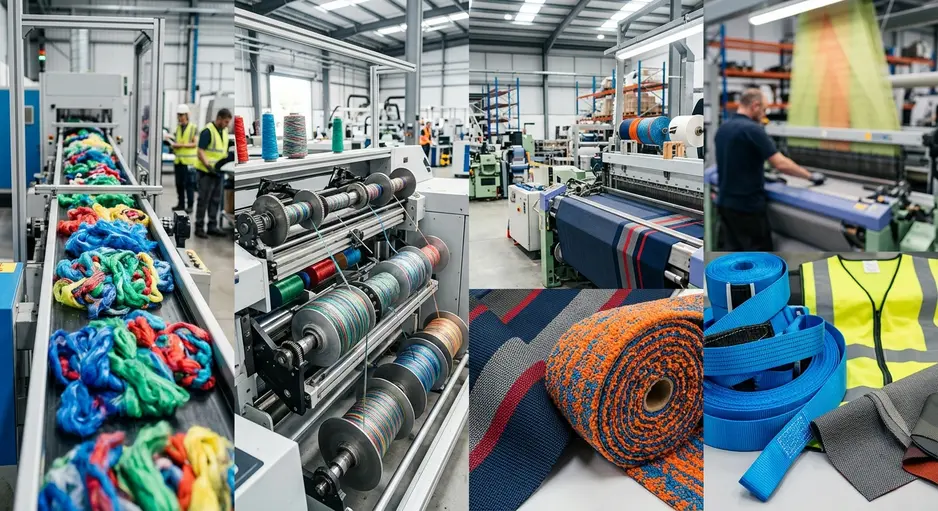
Production often starts with collected PET material. It is sorted, cleaned, and processed into flakes or chips. The prepared material is melted, filtered, spun into fibers, crimped, cut, and packed into bales.
The finished RPET staple fiber can be produced in different deniers, staple lengths, lusters, colors, and cross-sections. These choices affect how the fiber opens, blends, bonds, fills, and performs in the final product.
Dope-Dyed and Conventionally Dyed Fiber
In dope dyed recycled polyester fiber, pigments or a color masterbatch are introduced before or during spinning. The color becomes part of the fiber rather than being applied only to its surface.
This method can support repeatable bulk production and strong colorfastness when the formulation is correct. It may also reduce downstream coloring steps. Still, buyers should not assume that every recycled colored polyester fiber is dope dyed. The coloration method should be confirmed with the supplier.
Solid and Hollow Fiber Types
Solid recycled polyester fiber is widely used in yarns, felts, nonwoven webs, carpet layers, and technical textiles. It can offer good web formation and compatibility with needle punching or thermal bonding.
Hollow conjugated polyester fiber has internal air spaces and a three-dimensional crimp. This structure adds loft, softness, recovery, and thermal insulation. Siliconized and non-siliconized grades are available for different filling and processing needs.
Why Are Industries Choosing Colored RPET Fiber?
Can It Reduce Downstream Color Processing?
Pre-colored fiber can simplify or remove an extra dyeing step in suitable manufacturing systems. This can shorten production planning and reduce handling between processes. Any claim about water, energy, or emissions savings should be supported by process-specific data from the producer.
Color Consistency and Efficient Production
Consistent shades help manufacturers manage large production runs and reduce visible variation. Many buyers use CIELAB values and measurements to set acceptable color differences. The approved tolerance should be written into the purchase specification.
A physical master sample is also useful. Digital color values alone may not show how a shade looks under different lighting or within a finished nonwoven product.
Recycled Content and Traceability
Recycled fiber can support corporate recycled-content targets and responsible sourcing plans. Where required, GRS certified recycled fiber offers third-party verification of recycled content, traceability, and certain processing requirements.
GRS documentation does not prove that a fiber is UV resistant, colorfast, flame resistant, or suitable for a specific product. These properties need separate testing.
Key Benefits
- Custom color and shade-matching options
- Availability in solid, hollow, and mixed-denier forms
- Compatibility with carding, filling, needle punching, and thermal bonding
- Resistance to moisture and many common chemicals
- Potential reduction in separate dyeing steps
- Suitability for both visible and concealed components
What Are the Top Industrial Uses?
The main colored recycled polyester fiber industrial uses range from soft filling products to engineered technical materials. Each use requires its own mix of strength, color control, resilience, bonding behavior, and compliance testing.
Textile and Nonwoven Fabric Production
Colored recycled polyester fiber for textile industry production is used in blended yarns, felts, technical fabrics, carpet layers, backing materials, and needle-punched nonwovens. Solid fiber is common where uniform web formation and stable processing are important.
Black and grey grades are often suitable for felt, underlay, backing, and concealed components. Pre-colored material can reduce the need for added surface coloration when the fiber remains visible.
Fiber denier, cut length, crimp, tenacity, and finish should match the carding, spinning, or bonding equipment. A fiber that runs well in needle punching may not be ideal for fine yarn spinning.
Automotive Insulation and Interior Parts
Automotive suppliers use RPET fiber in trunk liners, carpet backing, wheel-arch liners, headliner substrates, door-panel insulation, and acoustic padding. As an automotive insulation fiber, it can support sound absorption, cushioning, and lightweight thermal control.
Dark needle-punched fiber is useful in concealed areas where appearance and recycled-content goals both matter. Yet automotive approval requires more than a technical data sheet. Finished parts may need tests for odor, fogging, volatile emissions, abrasion, flammability, and long-term durability.
Furniture, Mattresses, Quilts, and Pillows
Common applications include furniture cushion filling, upholstery batting, mattress comfort layers, stuffed goods, and protective padding. Hollow conjugated and siliconized grades are often selected when softness, loft, and compression recovery are priorities.
Quilt and pillow filling fiber must open evenly and retain its shape after repeated use. Buyers should review crimp, resilience, migration, hygiene requirements, and filling-machine performance.
Colored filling can also identify product grades or separate production lines. If the outer fabric is light, manufacturers should test for show-through, pigment migration, and appearance after washing or use.
Geotextiles and Construction Materials
Geotextile fiber applications include drainage layers, erosion-control materials, separation fabrics, protective felts, roofing felts, and reinforcement layers. Solid fiber is often formed into dense needle-punched webs for these products.
Outdoor exposure may call for UV-resistant polyester fiber or suitable stabilization. Engineers should test the finished geotextile for tensile strength, puncture resistance, permeability, chemical resistance, weathering, and expected service life.
Filtration and Industrial Nonwovens
Recycled polyester can be used in air-filter media, liquid-filtration support layers, industrial wipes, absorbent products, and equipment padding. Fiber diameter, cross-section, web density, and bonding method affect airflow and particle capture.
Filtration efficiency is a finished-media property. It cannot be predicted from color, recycled content, or fiber type alone. The assembled filter should be tested under its expected flow rate and operating conditions.
Acoustic, Thermal, and Protective Insulation
Other colored recycled polyester fiber industrial applications include acoustic panels, appliance insulation, HVAC padding, partition filling, and protective packaging. Hollow fiber can hold more air, which helps create loft and cushioning.
Density, thickness, airflow resistance, and construction all influence acoustic and thermal results. Flame-retardant performance must also be verified through the test method required for the final application.
Footwear, Carpets, Felts, and Other Products
Footwear components, carpet underlay, exhibition felt, craft felt, pet bedding, toys, protective packing, and molded fiber parts are other possible uses. Colorfast recycled polyester fiber is especially useful when the raw fiber remains visible in the finished item.
Industries using colored recycled polyester fiber also include luggage, packaging, event materials, appliance manufacturing, and general industrial padding.
Which Fiber Specifications Suit Each Application?
Application-Based Selection Guide
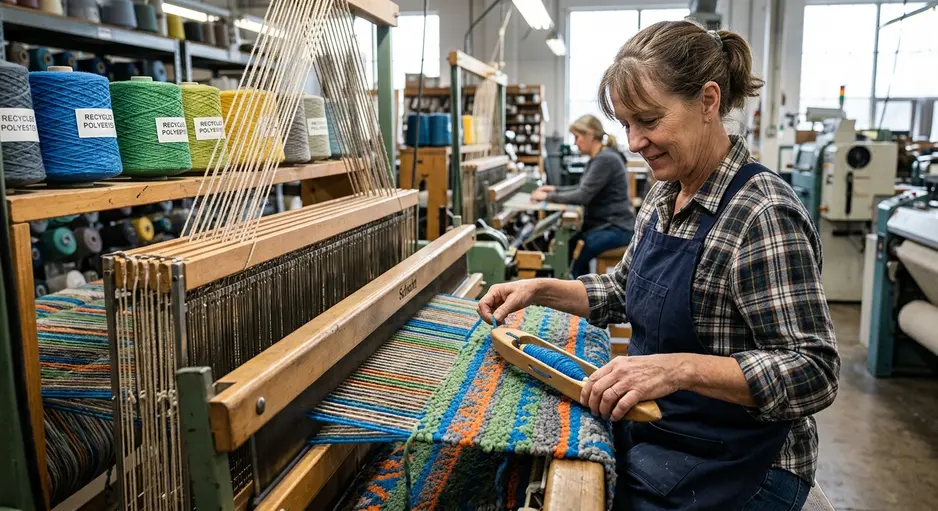
- Textile spinning: Solid fiber selected by denier, cut length, tenacity, finish, and shade.
- Automotive nonwovens: Solid or hollow fiber tested for bonding, odor, emissions, and colorfastness.
- Cushions and bedding: Hollow conjugated fiber selected for loft, crimp, recovery, and siliconization.
- Geotextiles: Solid fiber chosen for tenacity, cut length, process stability, and UV performance.
- Acoustic insulation: Hollow or mixed-denier fiber assessed through finished-panel tests.
- Filtration: Fine or engineered fiber selected for diameter, uniformity, and web formation.
Specifications Buyers Should Confirm
- Denier or dtex and permitted tolerance
- Staple length, tenacity, and elongation
- Crimp level and opening performance
- Solid or hollow structure
- Siliconized or non-siliconized finish
- Shade standard and agreed tolerance
- Colorfastness and UV requirements
- Moisture and contamination limits
- Bale weight, labeling, and packaging
How Do You Choose a Colored Polyester Fiber Supplier?
Verify Certification and Traceability
When certification is required, request a valid scope certificate and relevant transaction records. Confirm the recycled-content percentage and check that the named facility and product category fall within the certificate’s scope.
Review Color and Technical Controls
A qualified colored polyester fiber manufacturer or supplier should be able to discuss technical specifications, color targets, and lot control. Ask for a technical data sheet, sample material, shade card, and retained master sample before approving bulk production.
Relevant reports may include tenacity, elongation, colorfastness, UV exposure, and application-specific testing. The required tests will vary by end use.
Assess Bulk and Export Capabilities
When comparing a bulk colored recycled polyester fiber supplier or an international colored recycled polyester fiber exporter, review these practical factors:
- Minimum order quantity and production capacity
- Lead time and custom-shade options
- Bale compression and container loading
- Export documents and agreed Incoterms
- Payment terms and sample procedures
- Processes for claims, replacements, and repeat orders
Buyers considering Saheb Fibre can contact the company directly to request current product specifications, sample availability, custom shade details, bulk supply terms, and export information.
What Procurement Practices Reduce Quality Risks?
Approve a Pilot Lot
Test a pilot lot on the actual carding, spinning, filling, needle-punching, or thermal-bonding line. Check dust, static, fiber opening, breakage, bonding, shade, and output speed under normal production conditions.
Create a Written Fiber Specification
The purchase document should state the fiber type, recycled-content requirement, denier, cut length, finish, color code, physical master sample, bale requirements, test methods, and required certification.
Test the Finished Product
Fiber approval is only the first step. Automotive parts may require odor, fogging, VOC, and flammability tests. Geotextiles need tensile, puncture, permeability, and weathering checks. Bedding may require resilience, migration, hygiene, and flammability testing.
What Is Driving the Global Market?
The colored recycled polyester fiber global market is being shaped by recycled-content goals, circularity programs, and demand for materials that can work with existing equipment. Automotive, furniture, textile, and nonwoven producers are exploring recycled alternatives for both visible and concealed products.
Growth in technical nonwovens is also creating demand in insulation, geotextiles, filtration, and protective materials. Black, grey, and other high-volume shades can be attractive for industrial use.
Key challenges include feedstock quality, lot-to-lot shade variation, contamination, price changes, documentation, and the difficulty of recycling finished products that contain blends, coatings, or chemical treatments.
Top Industrial Uses of Colored Recycled Polyester Fiber
Choose Fiber Around the Final Application
Colored RPET fiber can serve textiles, vehicles, furniture, bedding, construction materials, filters, and insulation products. The right choice depends on fiber construction, shade tolerance, mechanical performance, certification needs, and finished-product testing.
For a useful quotation, share the intended application, denier, cut length, fiber type, annual volume, color target, test requirements, and delivery market. Contact Saheb Fibre to discuss available specifications, custom shades, samples, bulk supply, and export requirements.
Frequently Asked Questions
1. What is colored recycled polyester fiber made from?
It is generally produced from recycled PET feedstock that is cleaned, prepared, melted, and spun into fiber. Color may be added during spinning or through another controlled coloration process. The product can be supplied as staple fiber in solid or hollow forms.
2. Is dope-dyed RPET fiber more colorfast?
It can provide strong and consistent colorfastness because the pigment is incorporated into the polymer melt. Actual results depend on pigment quality, processing conditions, exposure, end use, and the test method applied.
3. Which industries use colored RPET fiber?
Major users include textile, automotive, furniture, bedding, nonwoven, geotextile, filtration, insulation, carpet, footwear, packaging, and felt manufacturers. The correct fiber structure and specification depend on the product.
4. Is it suitable for outdoor products?
It may be suitable when it has the right UV stabilization and weathering performance. Buyers should request test results that reflect the planned exposure period, climate, color, and final product construction.
5. What is the difference between solid and hollow fiber?
Solid fiber is commonly used for yarn, felt, and technical nonwovens. Hollow fiber contains air spaces that increase loft and cushioning, so it is often chosen for filling, thermal insulation, quilts, pillows, and furniture.