Choosing between black colored RPSF and bright colored RPSF is not just about appearance. In industries like ceramic tile manufacturing, the right fiber can affect strength, finish, and cost efficiency. Manufacturers today rely on recycled polyester staple fiber (RPSF) to improve durability while keeping production sustainable.
This guide explains how each type performs, where they work best, and how to make the right choice for your application. Whether you are sourcing in bulk or optimizing tile performance, understanding fiber behavior is key.
Understanding RPSF and Its Role in Industrial Manufacturing

What is recycled polyester staple fiber?
Recycled polyester staple fiber is made from post-consumer plastic, mainly PET bottles. It is processed into short fibers that can be blended into industrial materials. These fibers are widely used in construction, textiles, and fiber reinforced ceramics.
Key properties: strength, denier, cut length, and durability
RPSF comes in different specifications depending on industrial needs. The most important include:
-
Denier: Typically ranges from 1.2D to 15D for tile applications
-
Cut length: Commonly 32 mm to 64 mm
-
Tensile strength: Around 4–7 g/denier
-
Thermal resistance: Suitable for moderate to high processing conditions
These properties help improve crack resistance and bonding in tile matrices.
Why industries prefer RPSF over virgin fibers
Manufacturers are shifting toward RPSF because it offers a strong balance of performance and sustainability. It reduces raw material costs while supporting eco-friendly production. Many suppliers now provide eco-certified recycled fibers for manufacturers, making compliance easier.
Industrial-grade recycled fibers for construction and tiles
In the tile industry, RPSF acts as a reinforcement agent. It controls shrinkage, improves strength, and reduces breakage during handling. This makes it a preferred additive in modern tile production lines.
Black Colored RPSF: Properties and Industrial Uses
What makes black colored RPSF unique?
Black colored RPSF is produced using carbon-based pigmentation. This gives it higher UV resistance and better stability under harsh conditions. It is also more forgiving in terms of color consistency.
Black colored RPSF uses in ceramic tile manufacturing
Black fiber is widely used in structural tile applications where aesthetics are not visible. Common uses include:
-
Base layer reinforcement in ceramic tiles
-
Industrial-grade flooring tiles
-
Hidden structural components
These black colored RPSF uses focus on performance rather than design.
Performance benefits: UV resistance, cost-efficiency, consistency
-
Better resistance to UV degradation
-
Lower production cost compared to bright fibers
-
Uniform quality in bulk batches
This makes black fiber a practical choice for large-scale manufacturing.
Applications in nonwoven RPSF, geotextiles, and automotive sectors
Beyond tiles, black RPSF is used in:
-
Nonwoven fabrics
-
Geotextile reinforcement
Its durability supports heavy-duty industrial applications.
Technical specifications RPSF for industrial use (denier, tensile strength)
For tile manufacturing, commonly used specs include:
-
Denier: 3D to 6D
-
Cut length: 38 mm to 51 mm
-
High elongation and tensile stability
Bright Colored RPSF: Features and Specialized Applications
What defines bright colored RPSF?
Bright colored RPSF is available in shades like white, blue, green, and custom tones. These fibers are designed for applications where appearance matters along with strength.
Bright colored RPSF uses in decorative and premium tiles
Bright colored RPSF uses are common in premium tile segments. These include:
-
Decorative ceramic tiles
-
Designer surfaces
-
Visible reinforcement layers
Colored polyester fiber for decorative finishes and design flexibility
These fibers allow manufacturers to experiment with finishes. They can be blended into tiles to create unique textures or subtle visual effects.
Role in fiber reinforced ceramics and aesthetic applications
Bright fibers help combine performance with design. They are used in polymer fiber reinforcement for tiles where both strength and appearance are required.
RPSF colour fastness for high-temperature processes
Modern bright fibers are engineered for RPSF colour fastness for high-temperature processes. However, extreme kiln temperatures can still affect shade stability, so selection matters.
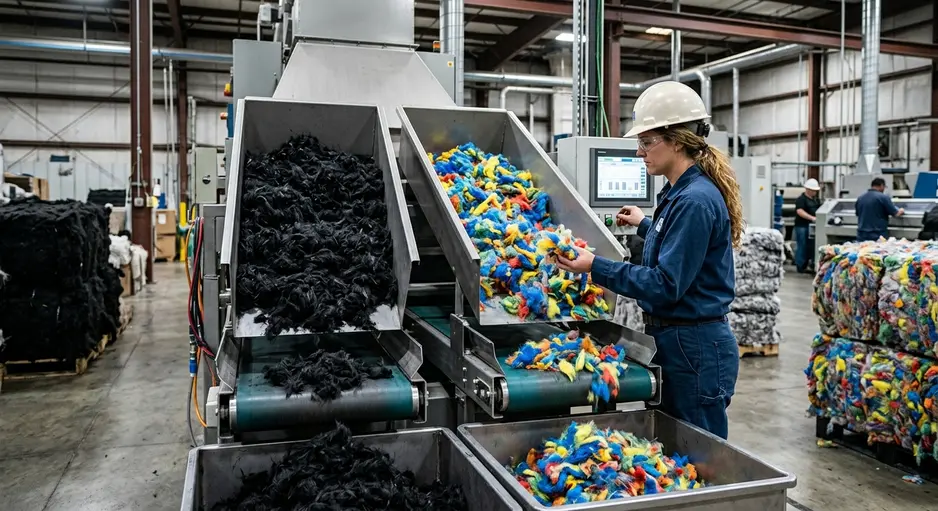
Black vs Bright Colored RPSF
Strength, durability, and bonding in tile matrices
Both types offer similar mechanical strength when produced to the same specifications. The difference lies more in stability and application suitability.
Performance comparison black vs bright fibers in high-heat conditions
Black fibers generally perform better under prolonged heat exposure. Bright fibers may require higher-grade processing to maintain color integrity.
Cost vs aesthetics: choosing the right balance
-
Black RPSF: lower cost, high durability
-
Bright RPSF: higher cost, better visual appeal
RPSF colorfastness ratings and long-term performance
Colorfastness ratings vary by manufacturer. High-quality bright fibers can maintain stability, but black fibers remain more consistent over time.
How to Choose the Right RPSF for Tile Manufacturing
RPSF color selection guide for tile manufacturers
Choosing the right fiber depends on production goals. Manufacturers should align fiber type with both performance and design needs.
Factors: tile type, firing temperature, design goals
-
Tile type: structural vs decorative
-
Temperature exposure during firing
-
Surface finish expectations
Polymer fiber reinforcement for tiles: what engineers consider
Engineers focus on bonding strength, shrinkage control, and durability. Fiber compatibility with the tile mix is also critical.
Eco-friendly RPSF for sustainable tile production
Using recycled fibers supports green manufacturing. Many producers now prioritize sustainable fiber sourcing in India to meet global standards.
Common mistakes when selecting colored recycled polyester staple fiber
-
Ignoring temperature limits
-
Choosing color over performance
-
Not verifying supplier quality standards
Sourcing RPSF in India: Manufacturers, Exporters, and Supply Chain
Bulk RPSF exporter India
India is a leading hub for bulk RPSF exporter from India. Buyers benefit from competitive pricing and consistent supply.
RPSF exporters from India for tiles
Export demand is growing due to the rise of sustainable construction materials. Indian suppliers serve markets across Asia, Europe, and the Middle East.
RPSF sourcing: manufacturing hub
India are known for strong manufacturing networks. Companies like Saheb Fibre provide reliable supply for industrial-grade fibers.
OEM RPSF supplier for tile manufacturers and custom solutions
Many suppliers offer OEM services, including custom colored RPSF for ceramic tile design. This helps brands create unique products.
Bulk fiber shipping and export compliance considerations
-
Proper packaging for moisture control
-
Compliance with international fiber standards
-
Documentation for export clearance
Real-World Applications and Case Examples
RPSF for ceramic tile manufacturing: performance case study
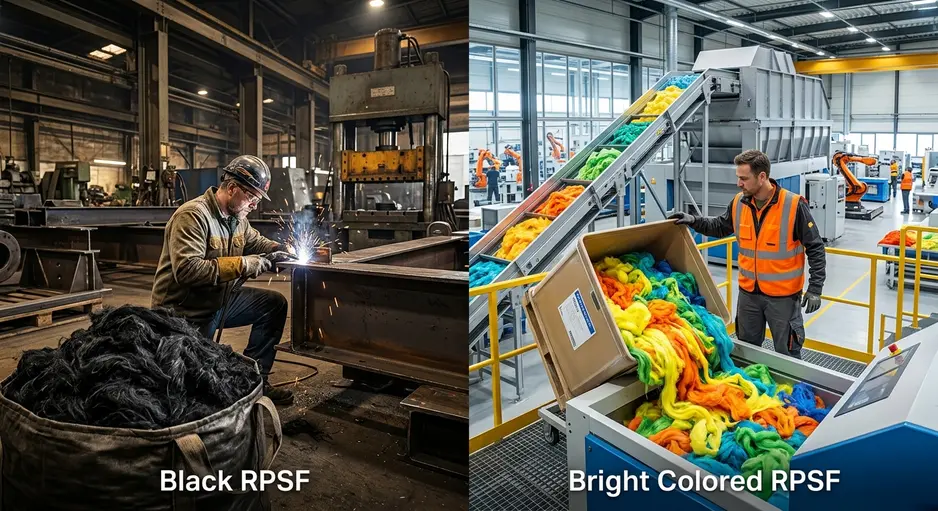
Manufacturers using black fiber report reduced cracking and improved durability in heavy-duty tiles. Bright fibers are used in premium lines where appearance adds value.
Use of colored recycled polyester staple fiber for tiles in premium interiors
Design-focused tiles often include bright fibers to enhance visual appeal without compromising strength.
Nonwoven RPSF applications beyond tiles
RPSF is also widely used in insulation, filtration, and upholstery industries.
Sustainable fiber sourcing India: industry adoption trends
More manufacturers are shifting toward recycled inputs to meet environmental standards and reduce waste.
Buy the Best RPSF for Your Industry
Conclusion
Choosing between black and bright RPSF comes down to application needs. Black fiber delivers strength and cost savings, making it ideal for structural uses. Bright fiber adds design value and is best suited for decorative tiles.
For manufacturers, the right decision depends on balancing performance, aesthetics, and budget. With strong supply networks in India and reliable partners, sourcing high-quality RPSF has become more accessible than ever.
Select wisely, and your fiber choice will directly enhance both product quality and production efficiency.
FAQs
1. What are the main differences between black and bright colored RPSF?
Black fiber focuses on durability and cost, while bright fiber supports aesthetics and design flexibility.
2. Is colored RPSF eco-friendly and suitable for sustainable manufacturing?
Yes, it is made from recycled materials and supports eco-friendly production.
3. Does RPSF color affect tile strength and durability?
No, strength depends on fiber specifications. Color mainly affects appearance and heat stability.
4. Can bright colored RPSF withstand high kiln temperatures?
Yes, but only if engineered for high-temperature resistance. Always verify specifications.
5. Are there custom colored RPSF options for tile design?
Yes, many OEM suppliers provide custom shades based on design needs.
6. What certifications should RPSF suppliers provide?
Look for quality assurance, recycling standards, and export compliance certifications.
7. Is black RPSF more cost-effective than bright colored RPSF?
Yes, black fiber is usually more affordable due to simpler processing.