rPET fibre export from India is growing rapidly due to the increasing global demand for sustainable materials. This fibre is made by recycling plastic bottles into usable textile fibres, making it an eco-friendly alternative to traditional polyester. With rising environmental awareness, industries are shifting towards recycled polyester fibre for production. India has become a key player in this space due to its strong recycling ecosystem. This creates huge opportunities for exporters and manufacturers.
What is rPET Fibre and Why is It Important?
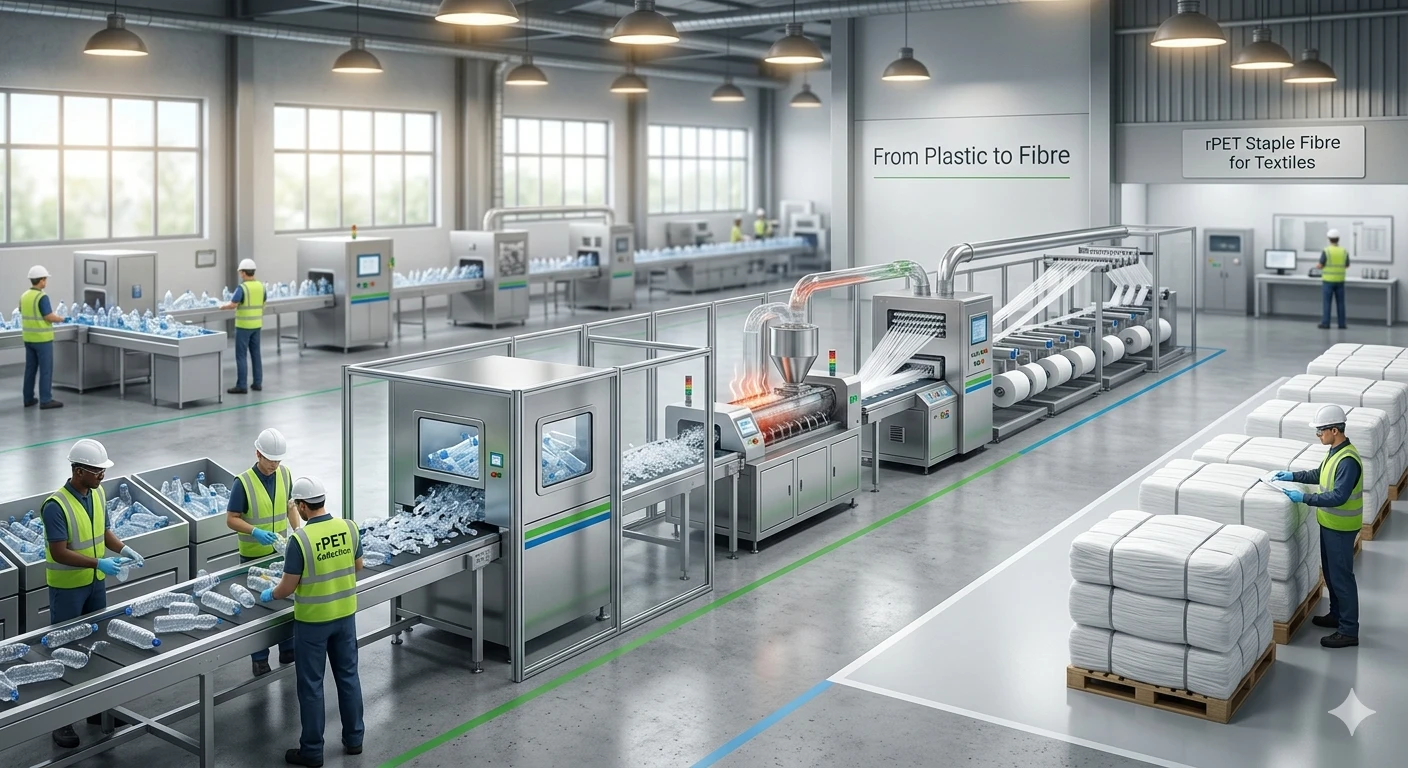
rPET fibre is produced by recycling used PET bottles into polyester staple fibre. The process includes collection, cleaning, melting, and converting plastic into fibre. This helps reduce plastic waste while creating valuable textile material.
Key Benefits
- Environment-friendly and reduces plastic pollution
- Lower energy consumption compared to virgin polyester
- Cost-effective solution for manufacturers
- Supports circular economy in textile industry
Applications
- Textile and apparel manufacturing
- Home furnishing products
- Automotive interiors
- Nonwoven polyester fibre applications
Global Demand for rPET Fibre
Rising Demand for Sustainable Materials
Global brands are adopting sustainable textile fibre solutions to meet environmental goals. This has increased the demand for recycled polyester fibre across industries.
Top Importing Countries
- United States
- European countries
- UAE and Middle East
- Southeast Asia
Market Growth Trends
The recycled polyester export market is expanding steadily due to strict environmental regulations and consumer awareness. Fashion brands are increasingly using eco friendly polyester fibre.
rPET Fibre Export from India: Current Market Scenario
India’s Export Strength
India has a strong network of recycled fibre manufacturers with easy access to PET waste. This ensures consistent production of polyester staple fibre.
Export Statistics and Trends
Exports of rPET fibre from India are increasing every year. Major production hubs include Gujarat and Maharashtra, where many fibre suppliers operate.
Competitive Advantage of Indian Exporters
- Competitive pricing compared to global markets
- Availability of skilled workforce
- Advanced recycling infrastructure
Opportunities in rPET Fibre Export from India

Increasing Global Sustainability Demand
Brands are shifting towards recycled polyester fibre to reduce environmental impact, creating long-term export opportunities. Global companies are actively adopting sustainable materials to meet ESG goals and consumer expectations. This shift is expected to drive continuous demand for recycled fibre in international markets.
Government Support and Policies
Indian government initiatives promoting recycling and exports are boosting the polyester fibre exporters industry. Policies supporting waste management and sustainability are encouraging more investments in recycling infrastructure. Export incentives further help Indian manufacturers stay competitive globally.
Emerging Markets for Export
New markets like Africa and Latin America are showing strong demand for recycled psf fibre. These regions are developing rapidly and adopting cost-effective, sustainable materials for industrial and textile use. This opens new growth avenues for Indian exporters.
Growth in Eco-Friendly Textile Industry
The demand for eco friendly polyester fibre is growing in fashion, packaging, and industrial sectors. Global fashion brands are increasingly committing to recycled materials in their production. This trend is creating consistent demand for sustainable textile fibre worldwide.
Challenges in rPET Fibre Export
Quality Consistency Issues
Maintaining global standards is crucial for recycled fibre manufacturers. Variations in raw material quality can affect the final output of polyester staple fibre. Consistent quality control processes are required to meet international buyer expectations.
Price Fluctuations
Changes in raw material availability can affect pricing of polyester staple fibre. Market demand and supply imbalances also influence cost stability. This makes pricing unpredictable for exporters and buyers in long-term contracts.
Competition from Other Countries
Countries like China and Vietnam are strong competitors in recycled polyester export. They often offer aggressive pricing and large-scale production capabilities. Indian exporters must focus on quality and reliability to stay competitive.
Regulatory and Compliance Challenges
Exporters must meet strict environmental and quality certifications. Global buyers demand compliance with standards like GRS and sustainability norms. Failure to meet regulations can result in shipment delays or rejection.
Export Process of rPET Fibre from India (Step-by-Step)
1. Collection of PET Bottle Waste
Used plastic bottles are collected from various sources to ensure a steady supply of raw material for recycling.
2. Sorting and Cleaning Process
The collected bottles are sorted by type and color, then thoroughly cleaned to remove impurities and contaminants.
3. Recycling into Fibre (Hollow Conjugated or Solid Fibre)
Clean PET flakes are melted and processed into recycled polyester fibre, including hollow conjugated fibre or solid fibre types.
4. Quality Testing and Certification
The produced fibre undergoes strict quality checks and meets required certifications to match international export standards.
5. Packaging and Shipping
The finished fibre is compressed, packed securely, and prepared for safe transportation to global markets.
6. Export Documentation and Compliance
All necessary export documents and compliance requirements are completed to ensure smooth international trade and delivery.
Comparison Table: rPET Fibre vs Virgin Polyester
Recycled polyester and virgin polyester differ mainly in source and environmental impact, with recycled fibre made from plastic waste offering a more sustainable option.
With lower energy consumption and rising demand for eco friendly polyester fibre, recycled materials are becoming the preferred choice for modern industries.
|
Feature |
rPET Fibre |
Virgin Polyester |
|
Raw Material |
Recycled PET bottles |
Petrochemicals |
|
Environmental Impact |
Low |
High |
|
Cost |
Moderate |
Higher |
|
Sustainability |
High |
Low |
|
Demand Trend |
Increasing |
Stable |
Why Global Buyers Prefer Indian rPET Fibre

Reliable rPET Fibre Suppliers with Large Production Capacity
India has a strong network of experienced manufacturers capable of handling large-scale production. This ensures consistent supply for bulk international orders without delays. Buyers trust Indian suppliers for their reliability and long-term partnerships.
Cost-Effective Pricing for Bulk Orders
Indian exporters offer competitive pricing due to efficient manufacturing processes and availability of raw materials. This makes it easier for global buyers to maintain cost efficiency while sourcing high-quality recycled fibre.
Ability to Supply Customized Recycled Polyester Fibre
Manufacturers in India provide flexible solutions based on buyer requirements. From different deniers to hollow conjugated fibre and solid variants, customization helps meet diverse industrial and textile needs.
Growing Focus on Sustainable Textile Fibre Production
Indian producers are increasingly adopting eco-friendly practices and global certifications. This focus on sustainability aligns with international environmental standards, making Indian products more attractive to conscious buyers.
Role of Saheb Fibre in rPET Fibre Export from India
Saheb Fibre is a trusted name in rPET fibre export from India, known for delivering high-quality recycled polyester fibre to global markets. The company focuses on sustainable production practices and advanced recycling processes to manufacture premium polyester staple fibre. With a strong commitment to quality and timely delivery, Saheb Fibre has built long-term relationships with international buyers. Their expertise in producing hollow conjugated fibre and nonwoven polyester fibre makes them a reliable partner in the growing recycled fibre industry.
Future of rPET Fibre Export from India
The future of rPET fibre export from India looks promising due to increasing environmental awareness worldwide. Demand for recycled polyester fibre will continue to grow in textiles, packaging, and industrial applications. Innovations in recycling technology and government support will further boost the industry. Indian polyester fibre exporters are well-positioned to capture global market share.
Conclusion
rPET fibre export from India is emerging as a strong and sustainable business opportunity. With rising global demand, strong manufacturing capabilities, and government support, India is becoming a key supplier of recycled polyester fibre. Despite some challenges, the growth potential remains high. Businesses looking to enter this market can benefit from long-term opportunities and global demand.
FAQs
1. What is the demand for rPET fibre globally?
Demand is increasing due to sustainability trends and environmental regulations.
2. Is exporting rPET fibre profitable from India?
Yes, due to high global demand and competitive production costs.
3. What certifications are required for export?
Certifications like GRS (Global Recycled Standard) are commonly required.
4. How to start rPET fibre export business?
Set up recycling, ensure quality standards, and connect with global buyers.
5. What industries use rPET fibre the most?
Textile, automotive, packaging, and nonwoven industries are major users.