Plastic waste has become one of the most pressing environmental challenges of our time. From overflowing landfills to polluted oceans, plastic pollution is affecting ecosystems, wildlife, and human health worldwide. Amid this crisis, recycled polyester has emerged as a practical and scalable solution that directly tackles plastic waste reduction while supporting the shift toward sustainable materials.
This blog explores how recycled polyester is helping reduce plastic waste globally, how it is produced, its benefits and limitations, and why it plays a key role in modern plastic pollution solutions.
The Growing Problem of Plastic Waste and Pollution
Global plastic production has increased exponentially over the last few decades. Millions of tonnes of plastic waste are generated every year, yet only a small percentage is effectively recycled. The rest ends up in landfills, rivers, and oceans, contributing to widespread plastic pollution.
Synthetic materials like polyester are part of this problem. Traditional polyester is made from petroleum-based resources, relying heavily on fossil fuels and energy-intensive manufacturing. Once discarded, polyester products can take hundreds of years to decompose, further worsening environmental damage.
Microplastics shed from synthetic textiles during washing also contribute to ocean pollution, making plastic waste a complex issue that requires multi-level solutions. This is where recycled polyester offers a meaningful alternative by reusing existing plastic instead of creating new plastic from scratch.
What Is Recycled Polyester?
Recycled polyester is a synthetic fiber produced by reprocessing existing plastic waste most commonly PET bottles into usable polyester fibers. Instead of extracting crude oil to create virgin polyester, recycled polyester uses plastic that has already been manufactured, used, and discarded.
Often referred to as rPET polyester, this material plays a crucial role in closing the loop of plastic use and promoting a circular economy. It is widely used across industries such as fashion, home textiles, automotive interiors, and packaging.
Recycled Polyester vs Virgin Polyester
-
Virgin polyester: Made from petroleum, high energy consumption, higher carbon emissions.
-
Recycled polyester fiber: Made from plastic waste, reduced environmental impact, lower dependence on fossil fuels.
The PET Bottle Recycling Process Explained
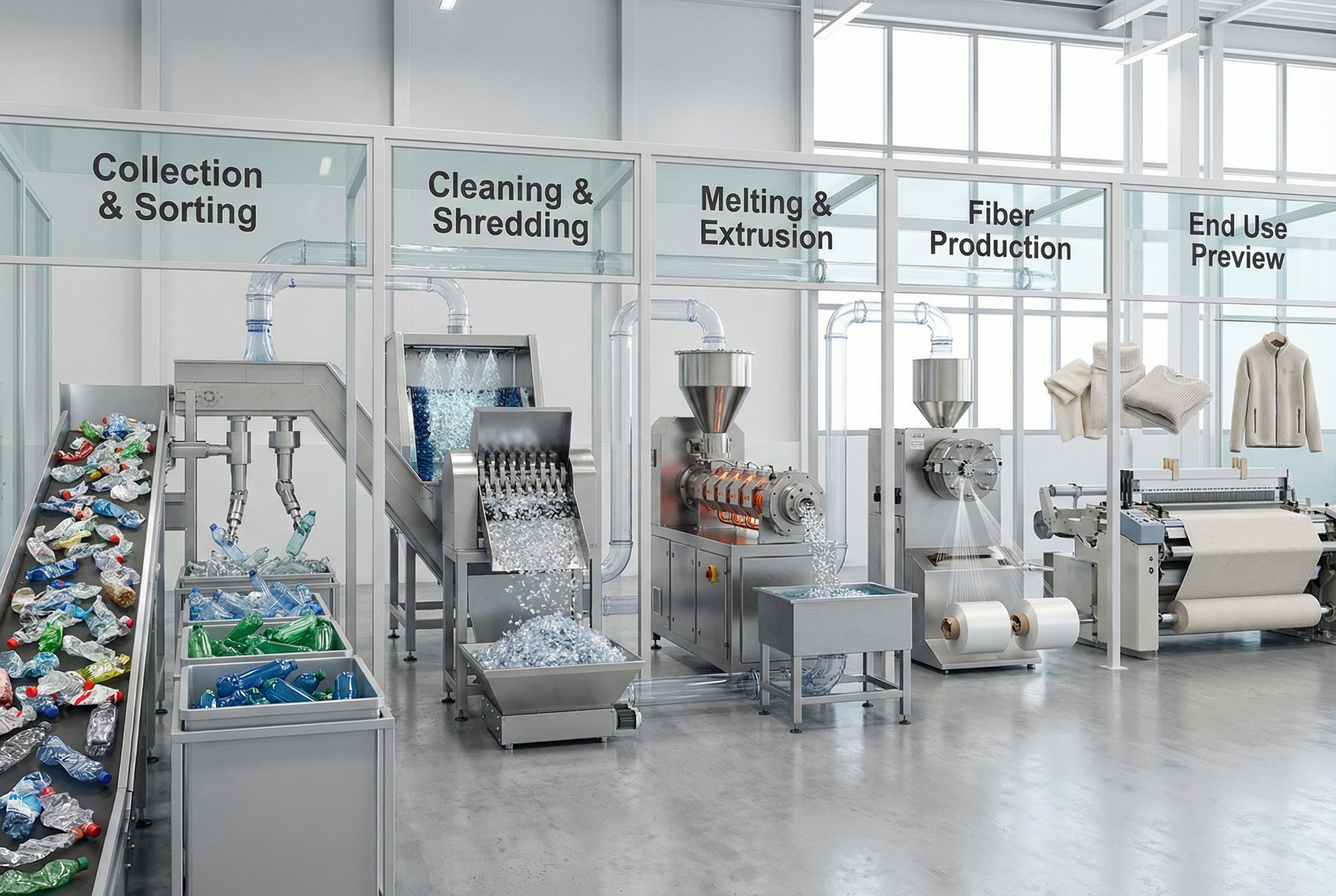
One of the most common sources of recycled polyester is discarded PET bottles. Understanding the PET bottle recycling process highlights how plastic waste is transformed into a valuable resource.
Step-by-Step Recycling Process
-
Collection & Sorting: Used plastic bottles are collected from recycling facilities and sorted based on color and quality.
-
Cleaning & Shredding: Bottles are washed to remove labels and contaminants, then shredded into small flakes.
-
Melting & Extrusion: These flakes are melted and extruded into pellets or chips.
-
Fiber Production: The pellets are spun into fibers, creating recycled polyester staple fiber or filament yarn.
These fibers are then woven or knitted into recycled polyester fabric suitable for clothing, furnishings, and industrial applications.
Environmental Benefits of Recycled Polyester
1. Significant Plastic Waste Reduction
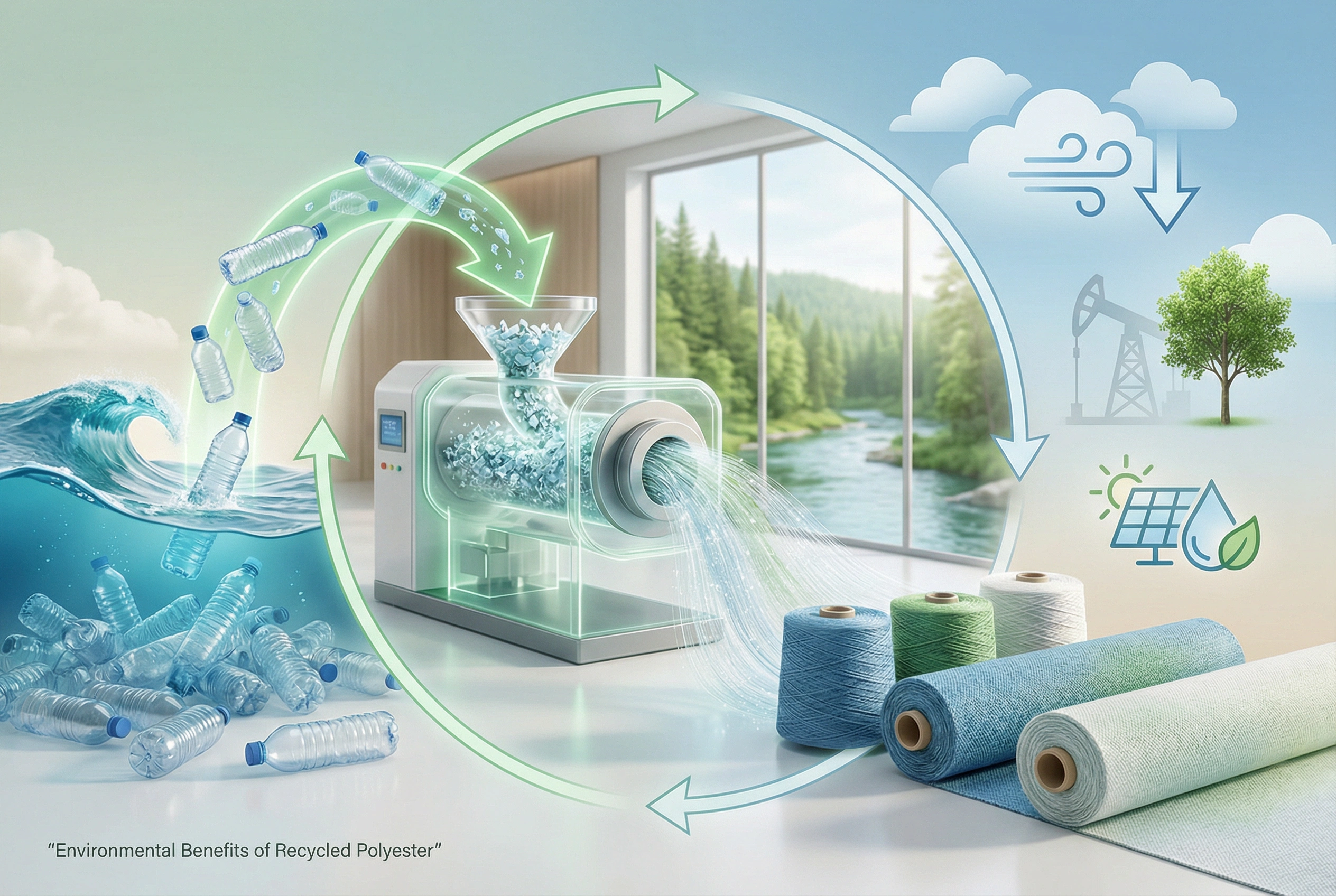
By repurposing post-consumer plastic, recycled polyester diverts millions of bottles away from landfills and oceans. Every recycled polyester product represents plastic waste that has been given a second life.
2. Lower Carbon Footprint
Compared to virgin polyester, recycled polyester production uses less energy and emits fewer greenhouse gases. This reduction in carbon emissions makes it an important step toward climate-conscious manufacturing.
3. Reduced Dependence on Fossil Fuels
Because recycled polyester does not require new petroleum extraction, it conserves non-renewable resources and supports long-term sustainability goals.
4. Water and Energy Savings
Manufacturing sustainable polyester from recycled materials consumes significantly less water and energy, helping reduce the overall environmental footprint of textile production.
5. Supports a Circular Economy
Instead of following a “take–make–dispose” model, recycled polyester supports reuse and regeneration, forming a core part of modern plastic pollution solutions.
Applications of Recycled Polyester in Everyday Life

Recycled polyester has become a versatile material used across multiple industries.
Fashion and Apparel
Recycled polyester clothing is now common in:
-
Activewear and sportswear
-
Jackets, fleeces, and outerwear
-
Casual wear and accessories
Major fashion brands are increasingly adopting recycled polyester fabric to meet sustainability commitments without compromising performance or durability.
Home Textiles
Recycled polyester fiber is used in:
-
Carpets and rugs
-
Upholstery fabrics
-
Curtains and cushions
-
Bedding and mattresses
Automotive and Industrial Uses
Automotive interiors, insulation materials, and industrial textiles often use recycled polyester staple fiber due to its strength and durability.
Packaging and Consumer Goods
Beyond textiles, rPET polyester is widely used for packaging, bottles, and containers, helping reduce plastic pollution at scale.
Challenges and Limitations of Recycled Polyester
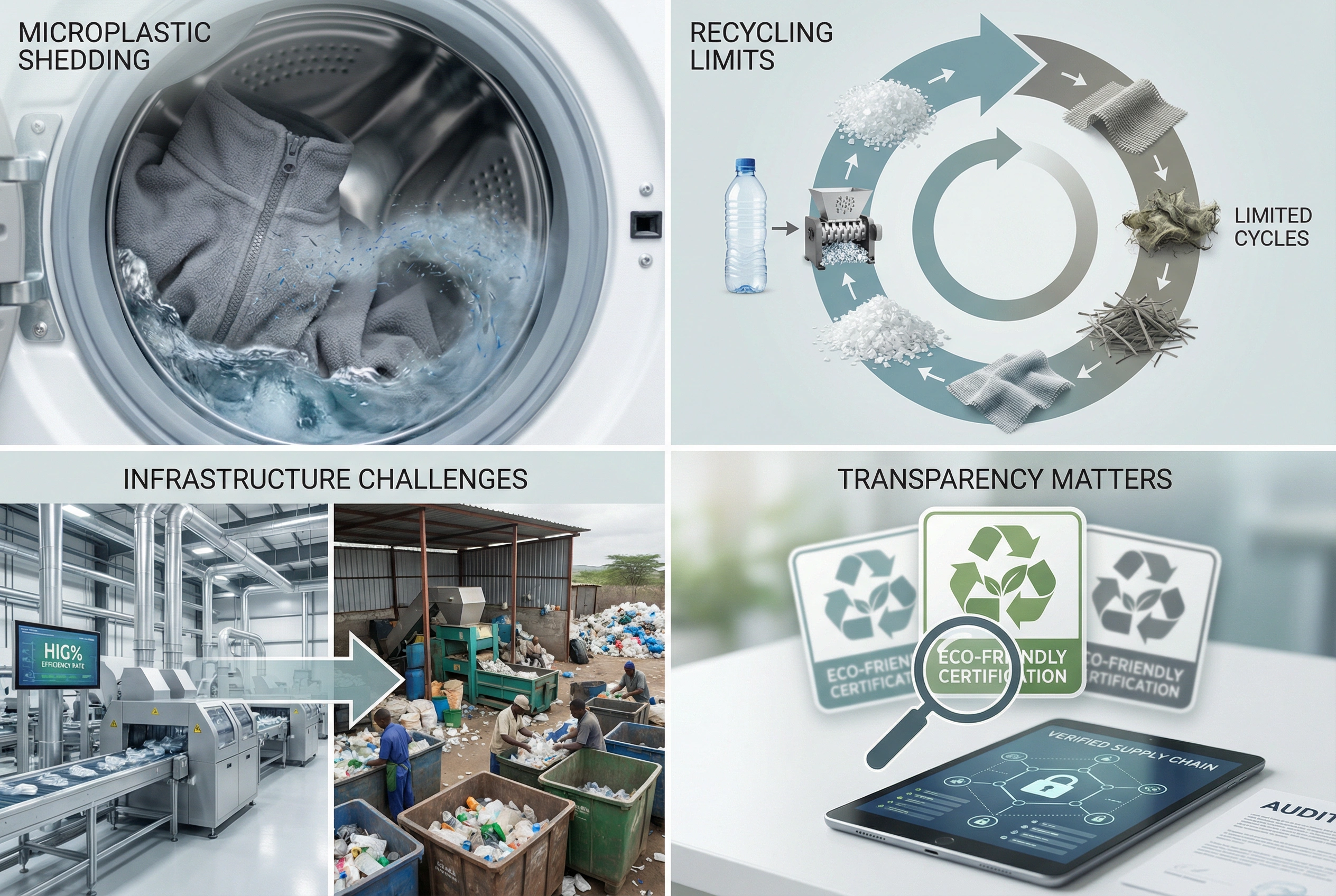
While recycled polyester offers many benefits, it is not without challenges.
1. Microplastic Shedding
Like all synthetic fibers, recycled polyester can shed microplastics during washing. Although it reuses existing plastic, it does not completely eliminate microplastic pollution.
2. Limited Recycling Cycles
Plastic quality degrades over time, meaning polyester cannot be recycled indefinitely without blending with virgin material.
3. Infrastructure Gaps
Not all regions have advanced recycling facilities, limiting the global adoption of recycled polyester.
4. Risk of Greenwashing
Some brands exaggerate sustainability claims. Certifications and transparency are essential to ensure recycled polyester products genuinely contribute to plastic waste reduction.
Recycled Polyester and the Future of Sustainable Textiles
The future of recycled polyester looks promising as technology continues to improve. Innovations in chemical recycling are allowing plastic waste to be broken down at the molecular level, producing higher-quality fibers that can be recycled multiple times.
Governments and industries are also investing in better recycling infrastructure and stricter plastic waste regulations. As awareness grows, recycled polyester is becoming a cornerstone of eco-friendly fabrics and responsible manufacturing.
Combined with other sustainable practices such as responsible consumption, improved garment care, and alternative fibers, recycled polyester can significantly reduce global plastic pollution.
How Consumers Can Support Plastic Waste Reduction
Consumers play a vital role in supporting recycled polyester and reducing plastic waste.
-
Choose products made with recycled polyester fabric.
-
Support brands committed to transparency and sustainability.
-
Wash synthetic garments less frequently and use microfiber filters when possible.
-
Recycle plastic responsibly to keep materials within the recycling loop.
Small, conscious choices can collectively drive meaningful change.
Why Recycled Polyester Matters for a Sustainable Future
Recycled polyester represents a shift toward smarter resource use. It demonstrates how innovation can turn waste into value while addressing global environmental challenges.
By supporting recycled materials, industries can reduce pollution, conserve resources, and move toward long-term sustainability.
The growing adoption of rPET polyester highlights its importance in shaping a cleaner, more responsible future.
Why Choose Saheb Fibre for Recycled Polyester
Saheb Fibre specializes in producing high-quality recycled polyester that supports effective plastic waste reduction and sustainable manufacturing. By converting post-consumer plastic into reliable fiber solutions, the company helps industries reduce their environmental footprint.
With controlled processes and consistent quality checks, Saheb Fibre supplies recycled polyester staple fiber made from rpet polyester, supporting the pet bottle recycling process and circular economy goals. Its focus on performance, durability, and sustainability makes Saheb Fibre a trusted partner for eco friendly fabrics and industrial applications.
Conclusion: Moving Toward a Plastic-Free Planet
The fight against plastic waste requires action at every level. Recycled polyester offers a practical and scalable solution that transforms plastic waste into valuable resources.
From reducing environmental harm to supporting sustainable manufacturing, its impact is global and long-lasting. Companies like Saheb Fibre continue to lead by example, proving that sustainability and performance can go hand in hand.
By choosing recycled polyester today, we take an important step toward a cleaner, healthier, and more sustainable planet.
People Also Ask – Common Questions
1. Is recycled polyester environmentally friendly?
Yes, recycled polyester reduces plastic waste, lowers energy use, and minimizes carbon emissions compared to virgin polyester.
2. How much plastic waste does recycled polyester reduce?
Each ton of recycled polyester can reuse thousands of plastic bottles that would otherwise contribute to pollution.
3. Is recycled polyester as durable as virgin polyester?
Recycled polyester offers comparable durability, strength, and performance for most applications.
4. Can recycled polyester be recycled again?
Yes, recycled polyester can be processed multiple times, supporting circular economy principles.
5. Is recycled polyester safe for everyday use?
Recycled polyester is safe and widely used in clothing, furnishings, and industrial products.