Two fibres may both be sold as recycled polyester staple fibre, yet perform very differently during carding, spinning, bonding or filling. The reason is simple: an RPSF grade is not defined by denier alone.
Fibre fineness, staple fibre length, strength, crimp, shrinkage, finish and consistency all affect the final result. Feedstock quality and contamination control matter too. This guide explains the key recycled polyester fibre specifications and shows how to match them with spinning, nonwoven, filling and industrial applications.
What Are RPSF Grades?
An RPSF Grade Is a Complete Specification
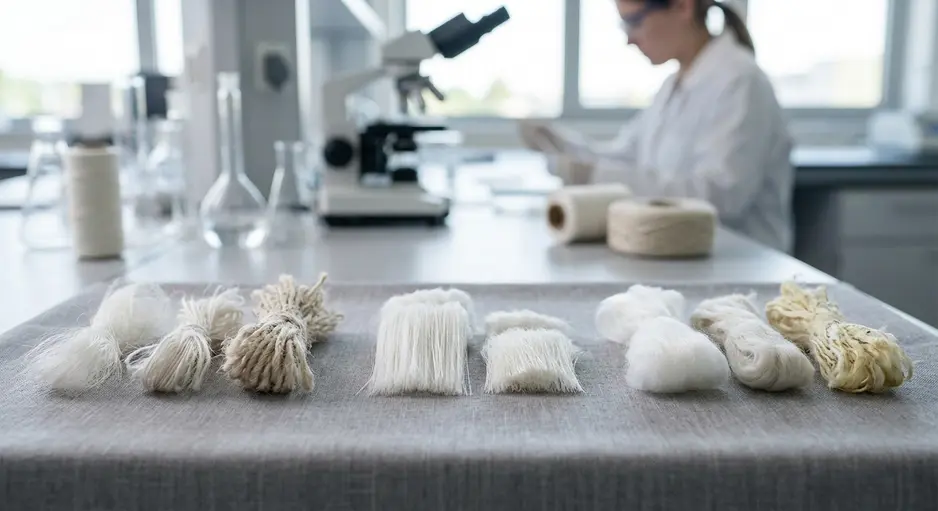
RPSF grades are combinations of measurable and functional properties. There is no universal A, B or C grading system that applies to every producer, machine and application.
A technical specification normally covers several of the following details:
- Denier or dtex
- Cut length in millimetres
- Solid or hollow construction
- Siliconized or non-siliconized finish
- Tenacity and elongation
- Crimp level and crimp stability
- Hot air shrinkage
- Moisture content and oil pick-up
- Fibre whiteness, colour and lustre
- Permitted contamination and defects
Grade, Quality and Recycled Content Are Different
A grade describes the product configuration. Quality describes how reliably the fibre meets the agreed limits from bale to bale. Recycled-content certification supports material claims and chain-of-custody verification, but it does not guarantee good spinning or nonwoven performance.
What Does RPSF Denier Mean?
Denier Measures Fibre Fineness
Denier is a unit of linear density. One denier means that 9,000 metres of fibre weighs one gram. A lower number indicates a finer fibre, while a higher number indicates a coarser fibre.
As a useful conversion, 1 denier is approximately 1.11 dtex. Linear density may be tested using methods such as ISO 1973 or ASTM D1577, subject to the agreed sampling and conditioning process.
How Does RPSF Denier Affect Fibre Quality?
RPSF denier affects softness, coverage, bulk, rigidity and processing behaviour. Fine fibres can create a softer hand and provide more individual fibres per unit of mass. This can support better coverage in fine yarns and lightweight webs.
Coarser fibres may offer greater bulk, resilience and easier opening in certain filling or industrial uses. However, denier does not independently determine RPSF quality. Tenacity, crimp, finish, contamination and denier uniformity can be just as important.
Indicative Denier Ranges by Application
- Fine spinning and blends: About 1.0–1.5D, with close attention to uniformity, strength and defects.
- General nonwovens: About 1.5–6D, depending on carding, bonding and web-weight needs.
- Cushion and toy filling: About 3–15D, selected for hand feel, loft and recovery.
- Industrial and geotextile products: About 3–15D or higher, based on strength and process needs.
These ranges are indicative rather than universal. Machine design, fabric weight, blend ratio and customer requirements should guide the final choice.
What Is RPSF Cut Length?
Difference Between RPSF Denier and Cut Length
Denier measures fineness. Cut length measures the physical length of each staple fibre. These properties affect different parts of production, but they must be selected together.
Common commercial lengths include 32, 38, 44, 51, 64 and 76 mm. Actual options and tolerances vary by producer. Buyers should therefore confirm both the nominal RPSF cut length and the permitted variation.
How Staple Fibre Length Affects Processing
Length influences fibre cohesion, carding, drafting, yarn formation and web uniformity. In needle-punched products, it also affects entanglement. Poor length control can increase fly, waste, end breaks or uneven areas in the web.
Short-fibre content deserves close attention in spinning applications. Too many short fibres may reduce drafting control and yarn evenness, even when the average length appears acceptable.
Is Longer RPSF Always Better?
No. Excessive length may cause carding or drafting problems on machines designed for shorter fibres. A fibre that is too short may create higher waste and weaker cohesion. The right length depends on the spinning system, card configuration, equipment settings and finished product.
Solid, Hollow and Siliconized RPSF Fibre Types

Solid RPSF
Solid RPSF is widely used in spinning, needle-punched materials, thermal-bonded webs, automotive textiles, geotextiles and other technical products. It is available in different colours, deniers, lengths and tenacity levels.
Hollow RPSF
Hollow RPSF contains one or more internal voids. These reduce density and help create loft. Common applications include pillows, cushions, quilts, toys and insulation products.
Hollow construction alone does not guarantee long-term resilience. Crimp, wall structure, finish and compression recovery also affect how well a filling retains its volume.
Siliconized vs Non-Siliconized Fibre
Siliconized fibre has a smoother surface and lower friction. It can improve flow, softness and loft in filling applications. Non-siliconized fibre may be preferred when greater grip is needed or when silicone could interfere with bonding or later processing.
Instead of requesting only “hollow filling fibre,” buyers should state the hollow structure, finish, denier, cut length and expected recovery.
Which RPSF Quality Specifications Matter Most?
Tenacity and Elongation
Tenacity indicates breaking strength in relation to linear density. Elongation shows how far the fibre stretches before it breaks. These properties should be evaluated together, especially for spinning and industrial uses.
Methods such as ISO 5079 or ASTM D3822 may be used for single-fibre tensile testing. Results should be compared only when the test method, gauge conditions and sample preparation are aligned.
Crimp Level and Stability
Crimp supports cohesion, cardability, bulk and resilience. Buyers may assess crimp frequency, recovery and stability after processing. Uneven crimp can cause irregular feeding, variable web formation or inconsistent loft.
Hot Air Shrinkage
Hot air shrinkage is important in heat-setting, thermal bonding, automotive textiles and products exposed to higher temperatures. A shrinkage percentage is incomplete unless the test temperature, duration and conditioning method are stated.
Moisture, Finish and Whiteness
Excess moisture can distort shipment weight and affect storage. Oil finish helps the fibre move through equipment, but too much or unevenly applied finish may cause deposits, odour, static changes or bonding problems.
Where appearance matters, fibre whiteness should be measured under consistent conditions. Instrumental colour values are more useful than a simple visual description such as “bright white.”
Contamination and Bale Consistency
Factors affecting recycled polyester fibre quality include coloured flakes, PVC, non-PET material, fused fibres, hard waste and dust. Variation in denier, length, shade or finish can also disrupt production.
Post-consumer PET feedstock requires strong sorting and process control. A credible specification should state tolerances, test methods, sampling frequency and lot identification rather than listing only typical values.
How to Choose RPSF Denier and Length
Best RPSF Grade for Spinning Applications
RPSF grade selection for spinning starts with the yarn count, spinning system and blend ratio. The fibre must also suit the opening, carding and drafting equipment.
- Choose a fine and uniform denier for finer yarns.
- Match cut length to the machinery and spinning method.
- Review tenacity and elongation together.
- Set limits for short-fibre content and contamination.
- Control crimp and oil pick-up for stable processing.
- Check bale consistency before regular production.
For example, a mill producing a fine polyester-cotton yarn may consider about 1.2–1.5D fibre with a compatible length. A coarse open-end yarn may need a different balance. Production trials remain essential.
RPSF Specifications for Nonwoven Production
Different nonwoven methods place different demands on the fibre:
- Needle punching: Review length, crimp, tenacity and entanglement behaviour.
- Thermal bonding: Check bonding characteristics, finish compatibility and shrinkage.
- Carded webs: Prioritize clean opening, controlled static and even finish.
- Automotive or acoustic felts: Evaluate bulk, resilience, weight consistency and dimensional stability.
RPSF for Filling and Insulation
For filling products, assess whether solid or hollow fibre is needed and whether it should be siliconized. Loft, compression recovery, odour, cleanliness and migration resistance are often more useful than denier alone. Some products use a denier blend to balance softness and support.
A Four-Step Selection Method
- Define the end product’s performance requirements.
- Confirm compatibility with opening, carding, spinning or bonding equipment.
- Agree on measurable RPSF technical specifications and tolerances.
- Run a production-scale trial before approving repeat orders.
A small laboratory sample may open and process differently from a compressed full bale. Trial material should therefore represent the planned commercial supply as closely as possible.
RPSF Supplier and Incoming Quality Checklist
What to Request Before Ordering
- Current technical data sheet
- Certificate of analysis for the shipment
- Denier and cut-length tolerances
- Tenacity and elongation values
- Crimp and shrinkage test data
- Moisture and oil pick-up limits
- Colour or whiteness requirements
- Recycled-content documentation
- Lot and bale traceability
- Packaging and storage guidance
GRS and RCS claims should follow Textile Exchange requirements. These standards support recycled-content and chain-of-custody claims, but physical performance must still be tested against the buyer’s needs.
How to Compare Suppliers
Compare suppliers under the same testing conditions. ISO 139 or ASTM D1776 can guide standard atmospheres for conditioning and testing, where applicable. Also review complaint handling, lead times, sample-to-bulk consistency, export packaging and technical support.
Practical Incoming Inspection
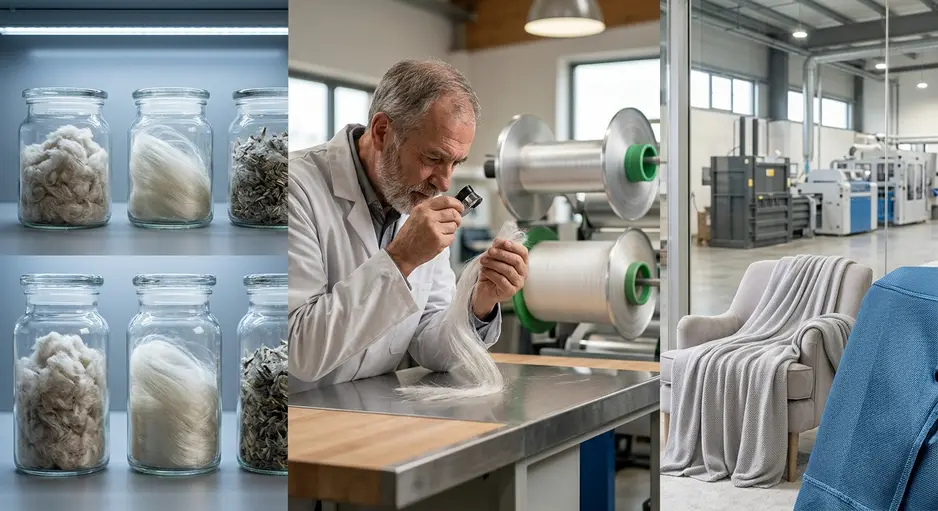
Sample several bales across each lot rather than testing only one bale. Condition samples before testing, record lot numbers and run a controlled machine trial. Track waste, breakage, web defects and finished-product results.
Buyers can contact Saheb Fibre to request current product specifications, samples and application-based guidance. Final approval should be based on documented requirements and a representative production trial.
Choose the Grade as a Complete System
The right fibre is not simply the finest or longest option. Reliable performance comes from matching RPSF denier and length with strength, elongation, crimp, shrinkage, finish, construction and machine needs.
Clear tolerances and regular incoming inspection reduce production risk. Before placing a recurring order, request a technical data sheet, confirm the test methods and complete a full-scale trial. For application-specific support, contact Saheb Fibre to discuss a suitable grade, sample or specification.
Frequently Asked Questions About RPSF Grades
1. What is the difference between RPSF denier and cut length?
Denier describes fibre fineness based on mass per unit length. Cut length describes how long each staple fibre is. Denier affects softness, coverage and bulk, while length affects cohesion, drafting, web formation and machine compatibility.
2. Does lower denier mean better RPSF quality?
No. Lower denier means finer fibre. Quality depends on whether the product consistently meets its agreed limits for fineness, length, strength, crimp, finish, shrinkage and contamination.
3. What is the best RPSF grade for spinning?
The best option depends on yarn count, spinning system, blend and equipment. Fine, uniform fibre with controlled cut length, low short-fibre content and suitable tensile properties is often preferred for finer yarns.
4. Which RPSF is best for pillow and cushion filling?
Hollow siliconized fibre is commonly selected for soft, lofty filling. However, buyers should also check compression recovery, cleanliness, odour, crimp and migration resistance. A denier blend may provide a better balance of softness and support.
5. How is recycled polyester staple fibre quality tested?
Testing may cover linear density, cut length, tensile properties, crimp, shrinkage, moisture, finish, whiteness and contamination. The method, conditioning atmosphere, sampling plan and tolerance should be agreed before comparing results.