Bangladesh is a major textile and apparel production hub. As brands seek more recycled content, local mills and factories need reliable sustainable textile raw materials. Yet choosing a recycled polyester fibre supplier in Bangladesh involves more than comparing prices.
Buyers must review fibre type, denier, cut length, finish, consistency and end-use performance. Certification, traceability, export support and delivery terms also matter. This guide explains how to source suitable fibre for apparel, home textiles and nonwoven products.
Why Bangladesh Is Sourcing Recycled Polyester Fibre
Demand for sustainable textile raw materials
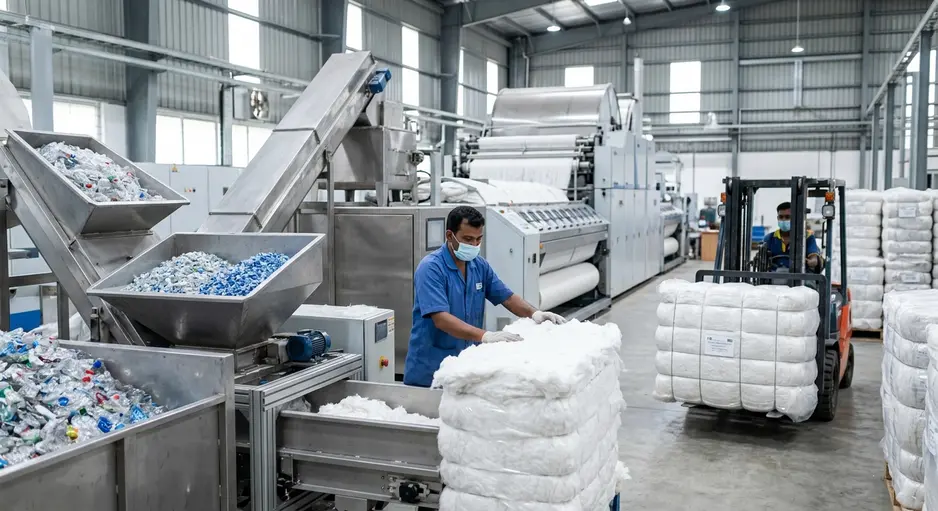
International buyers increasingly ask textile factories to use verified recycled inputs. This has created new demand for recycled PET fibre in spinning, filling, insulation and nonwoven production.
Using recycled material may reduce the need for virgin fossil-based feedstock. However, it should not be described as automatically eco-friendly. Its full impact depends on the feedstock, production energy, transport, product lifespan and end-of-life options.
Commercial opportunities for manufacturers
Recycled fibre can help Bangladesh manufacturers develop products that meet a buyer’s material requirements. Common opportunities include recycled-content yarn, apparel fabrics, pillows, quilts, mattress layers and technical nonwovens.
It can also be used in filtration, automotive felt, padding, insulation and geotextiles. Each product needs a different fibre grade, so factories should confirm specifications before placing a bulk order.
What Is Recycled Polyester Fibre?
From PET waste to usable fibre
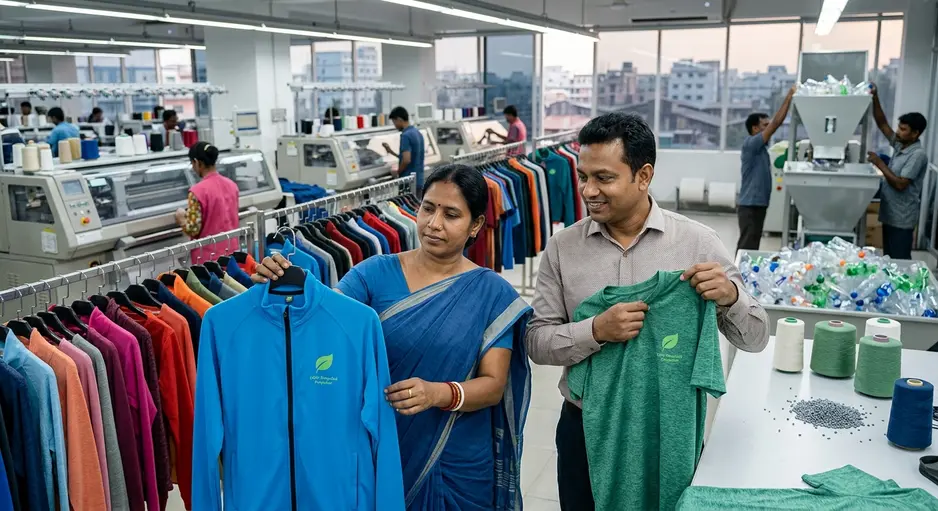
Recycled polyester is made from recovered polyester feedstock. Depending on the grade and supplier, the raw material may include post-consumer PET bottles or suitable polyester production waste.
A typical mechanical recycling process includes the following steps:
- PET material is collected and sorted.
- Labels, caps and other contaminants are removed.
- The PET is washed and processed into flakes.
- Clean flakes are melted and filtered.
- The polymer is extruded into continuous filaments.
- The fibre is drawn, crimped, cut and packed into bales.
Filtration and process control are important because contamination can affect colour, strength and production performance. Buyers should therefore ask how the feedstock and finished fibre are tested.
Recycled PET fibre versus virgin polyester
Virgin polyester is made from new petrochemical raw materials. Recycled material uses recovered polyester as its feedstock. Both may be processed into staple fibre for spinning, filling and industrial uses.
Well-produced rPET staple fibre can meet many normal performance needs. Still, colour, strength and batch consistency may vary with the feedstock and recycling process. Production trials are the best way to compare virgin polyester vs recycled polyester for a specific application.
Specifications for Different Applications
Fibre should not be selected on quoted cost alone. Performance depends on fibre denier and cut length, tenacity, elongation, crimp, finish, moisture, colour and construction.
Recycled polyester fibre for apparel manufacturing
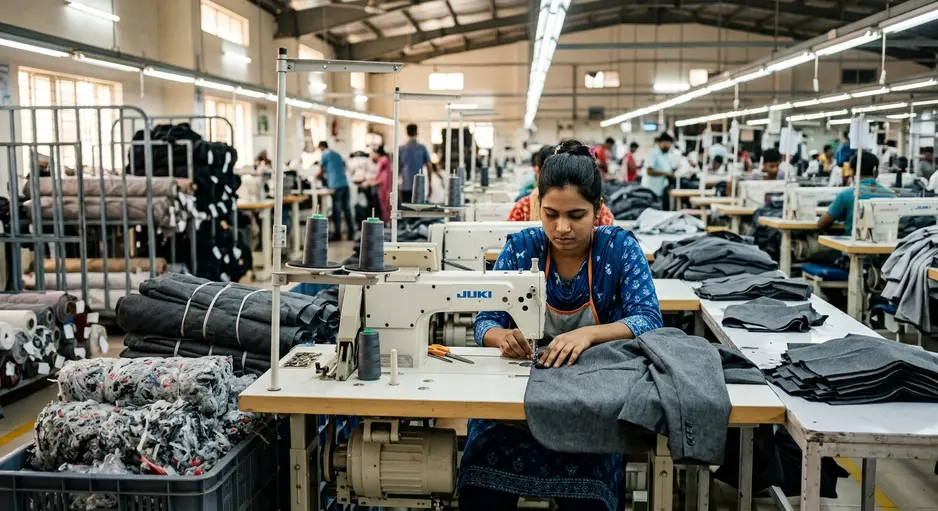
Spinning mills usually need fine, solid and uniform fibre. Important factors include spinnability, tenacity, elongation, cut accuracy and surface finish. The fibre must work with the mill’s spinning system and required yarn count.
For example, a mill producing a recycled polyester-cotton yarn may assess fine solid fibre around 1.2 to 1.5 denier with a spinning-compatible cut length. This is only a starting reference. The mill should test the grade on its own machinery before approving it.
Colour consistency is also important for light shades and undyed yarn. Buyers should agree on acceptable shade variation, contamination limits and technical tolerances.
Recycled polyester fibre for home textiles
Home textile and filling products may use hollow and solid fibre. Hollow fibre traps air and provides bulk, while solid fibre may create a denser or firmer structure.
Siliconized polyester fibre has a surface treatment that supports softness, smoothness and loft. It is often considered for pillows, cushions, quilts and soft toys. Non-siliconized polyester fibre has more surface friction and may suit firmer filling or selected processing methods.
Important buying criteria include:
- Softness and hand feel
- Loft and bulk
- Compression recovery
- Resilience after repeated use
- Fibre migration and shedding
- Consistency between bales
Recycled polyester fibre for nonwoven applications
Nonwoven producers may use recycled fibre in needle-punched felt, thermal-bonded products, filtration media, geotextiles, automotive parts, insulation and padding.
Web formation depends on consistent length, crimp and fibre opening. Thermal-bonded products may also require a specific bonding response or blend. Manufacturers should share their process, machinery and target product properties with the supplier.
Quick application guide
- Spinning and apparel: Fine solid fibre with controlled length, finish and tenacity
- Pillows and cushions: Hollow siliconized fibre with good loft and recovery
- Mattresses and padding: Hollow or solid fibre selected for firmness and bulk
- Needle-punched products: Solid fibre with suitable crimp and web-forming performance
- Thermal bonding: Application-specific fibre with compatible bonding behaviour
These are general guidelines. Final polyester staple fibre specifications should match the machinery, process conditions and performance targets of each factory.
How to Choose a Recycled Polyester Fibre Supplier
Review supply and export capabilities
A dependable recycled polyester fibre supplier should provide clear technical and commercial information. Buyers importing into Bangladesh should ask about production capacity, repeat-order consistency and export documentation.
Review the following points before placing an order:
- Available fibre grades and constructions
- Monthly supply or production capacity
- Minimum order quantity
- Normal production and shipment lead time
- Bale weight and packaging method
- Container-loading capacity
- Testing and quality-control procedures
- Export experience and document support
- Process for handling claims or nonconforming goods
Ask for a complete technical data sheet
A technical data sheet makes offers easier to compare. It should state the denier, cut length, tenacity, elongation, crimp, finish or oil pickup, moisture level and colour.
It should also identify whether the product is hollow or solid, siliconized or non-siliconized, and white or coloured. If recycled content is part of the purchase requirement, ask for the claimed percentage and relevant traceability documents.
Request samples and conduct trials
A sample may look acceptable but behave differently during spinning, carding, opening or filling. A controlled trial gives buyers a clearer view of processing performance.
- Tell the supplier the end use and machinery type.
- Request a representative sample from a normal production lot.
- Run laboratory checks and a production trial.
- Record waste, breakage and processing behaviour.
- Approve a control sample for the bulk order.
- Set measurable tolerances in the purchase contract.
- Compare delivered material with the approved sample.
How do you verify an exporter?
Confirm the company’s legal identity and current contact details. Ask for recent test reports, batch traceability and verifiable customer references where available. Certification should be checked with the relevant issuing or standard body.
For an initial order, buyers may also arrange an independent pre-shipment inspection. Payment terms, inspection rights and the claims process should be agreed before production begins.
Recycled Polyester Fibre Price and Landed Cost
What affects the price?
The recycled polyester fibre price changes with feedstock costs, fibre grade, denier and construction. Hollow conjugated products may be priced differently from standard solid grades. Siliconized and non-siliconized finishes can also have different costs.
Other price factors include colour, certification, order volume, packaging, exchange rates, freight and seasonal supply. A low product quote may not produce the lowest total cost if quality variation leads to waste or production downtime.
Ask for quotations under a stated Incoterm, such as FOB, CFR or CIF. The same Incoterm and destination should be used when comparing offers. Current HS classification, duties and import procedures should be confirmed with a licensed customs professional.
Details needed for an accurate quotation
- Required fibre type and construction
- Denier and cut length
- Final application
- Finish and colour
- Required recycled percentage
- Certification or brand requirements
- Order quantity and delivery schedule
- Destination port in Bangladesh
- Preferred Incoterm
Certifications and Responsible Sourcing
What does GRS certification cover?
Global Recycled Standard certification is used to support recycled-content verification and chain of custody. The standard also contains processing, social and chemical-related requirements within its stated scope.
A logo or marketing claim is not enough. Buyers should check the scope certificate, validity dates, certified location, covered processes and applicable products. Transaction documentation may also be needed for a certified supply chain.
GRS, OEKO-TEX and chemical requirements
Different standards serve different purposes. GRS focuses on recycled material and chain of custody. Relevant OEKO-TEX standards may address harmful-substance testing or production conditions, depending on the certificate.
ZDHC requirements may be important for chemical management and brand compliance. These systems are not interchangeable. Procurement teams should identify the exact documents required by the final customer before ordering.
Responsible sourcing checklist
- Confirm the type and origin of the feedstock.
- Request traceability documents for claimed recycled content.
- Review chemical and wastewater controls where relevant.
- Ask for available energy or emissions information.
- Test consistency across more than one production lot.
- Avoid unsupported “zero impact” or “100% sustainable” claims.
Sourcing Fibre for Bangladesh
Direct manufacturer or trading supplier?
A recycled polyester fibre manufacturer may offer direct technical communication, greater control over specifications and competitive terms for large orders. However, minimum quantities may be higher.
A trading supplier may provide access to several grades, consolidated sourcing and more order flexibility. Buyers should still identify the actual manufacturing source and confirm how consistency, inspection and claims are managed.
Requesting information from Saheb Fibre
Businesses evaluating Saheb Fibre should send a detailed enquiry rather than asking for a general price. Include the required denier, cut length, fibre construction, finish, colour, end use, order volume and destination port.
Ask Saheb Fibre to confirm current product availability, technical specifications, sample options, minimum order quantity, certification status and export terms. These details will help determine whether the available grade is suitable as recycled polyester fibre for textile industry production or another planned use.
Recycled Polyester Fibre Supplier in Bangladesh
Choose the Right Fibre for Your Production
Successful sourcing starts with application-specific specifications, verified documentation and consistent quality. Compare samples, production results and full landed costs before selecting a recycled polyester fibre supplier in Bangladesh or a recycled polyester fibre exporter to Bangladesh.
Contact Saheb Fibre with your fibre type, denier, cut length, end use, volume and destination port. Request current specifications, samples, certification details and an export quotation before making a purchasing decision.
Frequently Asked Questions
1. Who supplies recycled polyester fibre to Bangladesh?
Bangladesh manufacturers may source from local importers, trading companies or overseas producers. Buyers should compare technical specifications, recycled-content documents, samples, capacity, lead time and landed cost instead of choosing by price alone.
2. Is recycled polyester suitable for apparel production?
Yes. Textile-grade recycled fibre can be used for spinning and apparel when its denier, cut length, strength, finish and uniformity match the spinning system and target yarn quality. A production trial should be completed before bulk sourcing.
3. Is recycled polyester as strong as virgin polyester?
Well-made recycled material can meet many apparel, filling and nonwoven needs. Strength and consistency vary with feedstock and process control, so buyers should review test results and compare several lots.
4. What is the difference between siliconized and non-siliconized fibre?
Siliconized fibre has a surface treatment that usually makes it smoother, softer and easier to separate. Non-siliconized fibre has greater friction and often creates a firmer feel. The right choice depends on the product and machinery.
5. What are common recycled polyester fibre applications?
Uses include blended yarn, apparel fabric, pillows, cushions, quilts, mattresses, soft toys, insulation, filtration, automotive felt, geotextiles and needle-punched or thermal-bonded nonwovens.