Choosing the right fibre is an important decision for textile manufacturers, nonwoven producers, and industrial buyers. While both black recycled polyester fibre and white recycled polyester fibre are made from recycled polyester materials, their colour, appearance, and suitability for different applications can influence the final product.
Understanding the differences between these two options helps businesses select materials that meet their production needs, quality standards, and budget. The right choice depends on the intended application, required colour, fibre specifications, and manufacturing process.
In this guide, we compare black and white recycled polyester fibre, explain their common uses, and share practical tips for selecting the right material for your business.
What Is Recycled Polyester Fibre?
Recycled polyester fibre is a synthetic fibre produced by processing recovered polyester materials, often polyethylene terephthalate (PET) plastic bottles. Recycling gives suitable plastic waste another use by converting it into material for new products.
One common product is recycled polyester staple fibre (RPSF), which is cut into short lengths for use in textiles, filling materials, upholstery, and nonwoven products.
The recycled fibre manufacturing process generally involves collecting and sorting PET bottles, removing contaminants, washing and shredding the material into flakes, and melting and extruding the processed PET into fibre.
The fibre is then finished and cut to the required specifications. Actual processing routes can vary between manufacturers.
The final fibre can be produced in different colours, including black and several shades of white. These colour options help manufacturers select materials that suit the appearance and production requirements of their finished goods.
What Is Black Recycled Polyester Fibre?
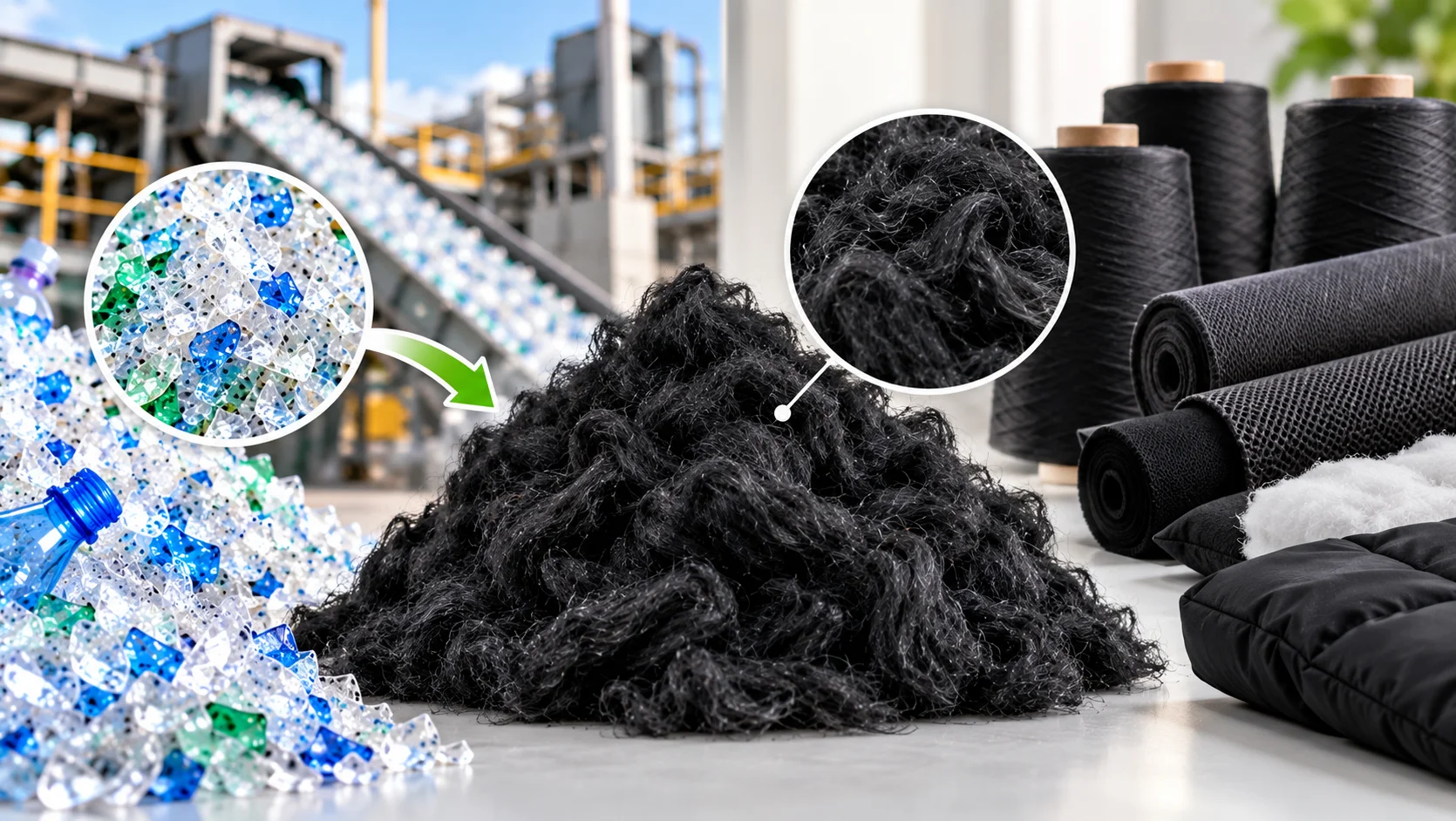
Black recycled polyester fibre is polyester staple fibre supplied in a black shade. It is used in products where a dark appearance is preferred or where black material fits the design and manufacturing requirements.
Common applications of black polyester fibre
- Black polyester staple fibre can be considered for:
- Automotive interiors and upholstery components.
- Carpets, rugs, and selected floor-covering products.
- Furniture padding and upholstery fillings.
- Dark-coloured nonwoven fabrics and industrial textiles.
- Certain insulation and filling products.
The suitability of black fibre depends on the end product and its technical requirements, not simply its colour.
Key advantages of black fibre
Suitable for dark-coloured products: Black fibre can help manufacturers achieve a dark appearance without relying on a white starting material for every application.
Potentially simpler colour processing: When the required final shade is black, purchasing fibre already supplied in a suitable black shade may reduce the need for additional colour treatment. The actual savings depend on the production process.
Useful for specialised applications: Black fibre may be appropriate for automotive textiles, carpets, and other products where dark shades are required.
Buyers should confirm shade consistency, colourfastness where relevant, fibre strength, and compatibility with their manufacturing equipment before placing bulk orders.
What Is White Recycled Polyester Fibre?
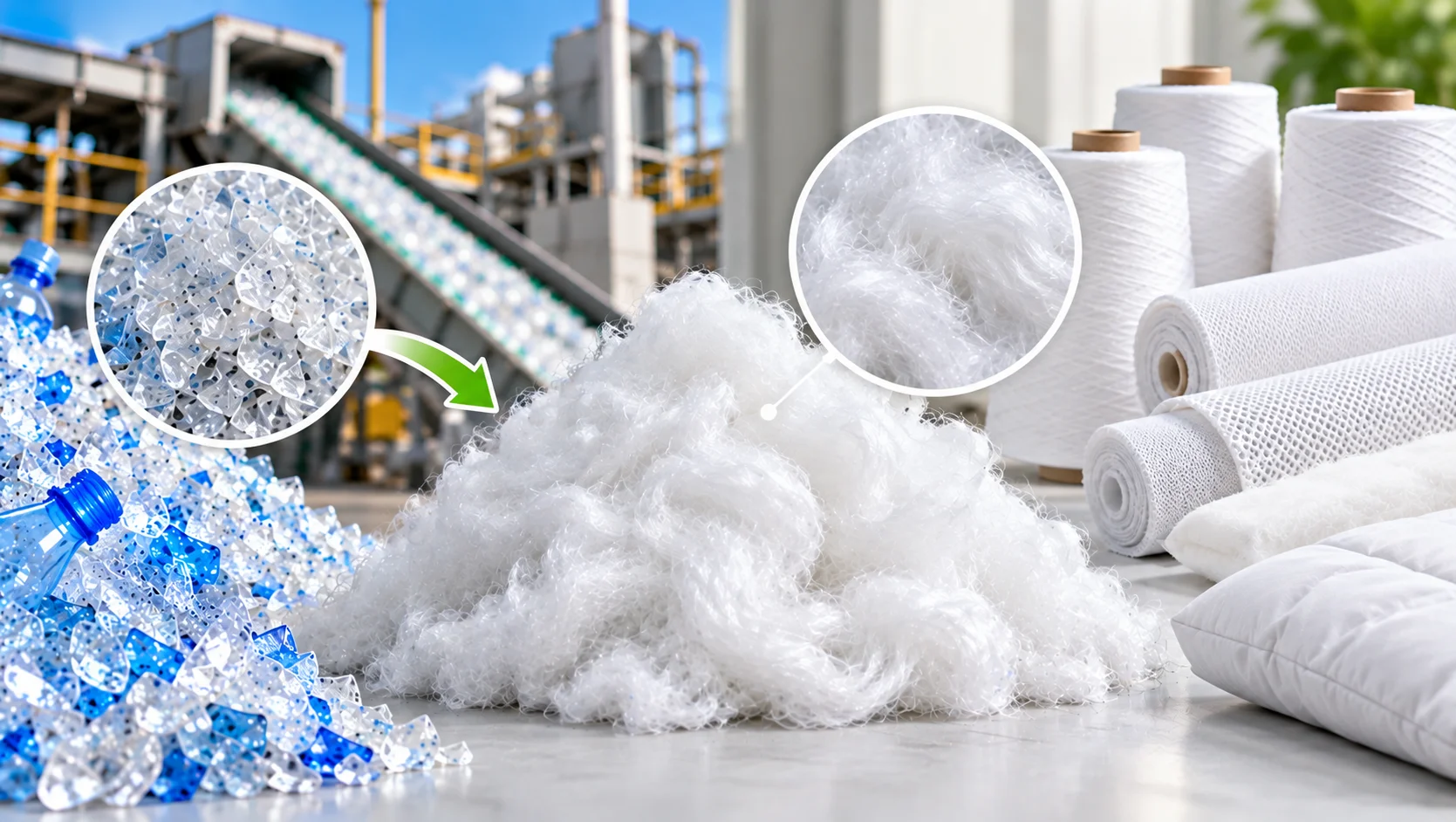
White recycled polyester fibre is polyester staple fibre supplied in a white shade. Depending on the product specification, it may be available in cotton white, pearl white, or brighter optical white shades.
White fibre is useful when the finished product requires a light appearance, a white base, or flexibility for subsequent colour processing.
Common applications of white polyester fibre
White polyester staple fibre is commonly considered for:
- Textile fabrics and selected garment applications.
- Pillows, cushions, and mattress filling.
- Furniture upholstery and home furnishings.
- Wipes and selected nonwoven products.
- Products requiring a light-coloured or white base material.
Different white shades can produce different visual results. Buyers should select the shade that best matches the finished product rather than treating every white fibre grade as interchangeable.
Key advantages of white fibre
Flexible colour options: White fibre can be a suitable starting material for certain dyeing or colour-processing operations. The final result depends on the fibre's initial shade, finish, dye system, and process conditions.
Suitable for light-coloured products: It is a practical option for applications where dark fibres could affect the appearance of the finished material.
Multiple shade choices: Manufacturers can select a white shade according to their requirements for brightness, natural appearance, or colour consistency.
White fibre is not automatically easier to process in every situation. Its suitability depends on the final colour, the required whiteness level, and the technical demands of the product.
Black vs. White Recycled Polyester Fibre: Key Differences
Although both fibres share the same broad polymer family, they serve different needs in production. The following table summarises the main differences buyers should consider.
| Comparison factor | Black recycled polyester fibre | White recycled polyester fibre |
|---|---|---|
| Appearance | Black or dark shade | Cotton white, pearl white, or bright white |
| Typical colour preference | Dark-coloured products | White and light-coloured products |
| Colour processing | May suit products requiring a black shade | May suit products requiring white or subsequent colour processing |
| Common applications | Carpets, automotive interiors, dark upholstery | Filling, textiles, light upholstery, selected nonwovens |
| Shade requirements | Consistent depth of black | Consistent whiteness and brightness |
| Further dyeing | Depends on the required shade and process | Depends on the fibre grade and intended colour |
| Quality assessment | Strength, denier, cut length, shade consistency | Strength, denier, cut length, whiteness consistency |
| Selection priority | Dark appearance and end-use performance | Light appearance, colour flexibility, and end-use performance |
The listed applications are general examples, not exclusive uses. Both colours may be suitable for several product categories if their specifications meet the manufacturer's requirements.
Does colour affect fibre quality?
Colour alone does not determine fibre quality. Factors such as feedstock quality, contamination, processing conditions, fibre fineness, cut length, tenacity, elongation, and moisture can influence performance.
Research on recycled polyester also highlights that feedstock variation and recycling processes can affect material properties. Buyers should therefore assess the actual product specification and, where necessary, test samples before approving a material for production.
How to Choose the Right Fibre for Your Application

Selecting between black and white recycled polyester fibre requires more than comparing colour and price. Consider the following factors before choosing a supplier.
1. Define the end use
Start by identifying the product you plan to manufacture. Automotive interiors, carpets, pillows, mattresses, textiles, and nonwoven products may have different colour, strength, and processing requirements.
Choose a fibre grade designed to meet those requirements rather than selecting a product based on appearance alone.
2. Check fibre specifications
Review the technical data provided by the manufacturer. Important parameters may include:
- Denier: Indicates fibre fineness and affects the feel and structure of the finished product.
- Cut length: Influences processing behaviour and suitability for different production systems.
- Tenacity and elongation: Help assess tensile performance and stretching behaviour.
- Moisture and finish: Can affect handling and processing consistency.
- Colour consistency: Helps maintain a uniform appearance across production batches.
Ask for a technical data sheet and representative samples where appropriate.
3. Consider additional colour processing
If your finished product must be black, pre-coloured black fibre may be a suitable option. If the product needs to be white or a different shade, a compatible white grade may be more appropriate.
However, the best choice depends on the colour-processing method and required result. Confirm these details with your production team and fibre supplier.
4. Evaluate total cost
Compare more than the quoted price per kilogram. Consider processing costs, material wastage, shade consistency, quality rejection rates, transportation, and the effect of the fibre on your production efficiency.
A suitable fibre can help avoid unnecessary adjustments and reduce the risk of costly production problems.
5. Choose a reliable supplier
A dependable recycled polyester fibre supplier should provide clear specifications, consistent batches, appropriate quality documentation, and transparent information about recycled content.
For bulk purchases, request samples, confirm order quantities and delivery schedules, and clarify the process for handling quality concerns. Certifications and recycled-content claims should be verified against the supplier's current documentation and the scope of the relevant certification.
Choosing a Recycled Polyester Fibre Manufacturer in India
When evaluating a recycled polyester fibre manufacturer in India, look for a supplier that understands your application and can provide suitable fibre specifications.
Consider these questions before making a decision:
- Does the supplier offer the required colour and fibre grade?
- Are denier, cut length, and performance parameters clearly documented?
- Can the supplier maintain consistent quality across repeat orders?
- Is documentation available to support recycled-content and certification claims?
- Can the supplier meet your volume, packaging, and delivery requirements?
Saheb Fibre manufactures recycled polyester staple fibre (RPSF) from recycled PET bottles and lists black, super white, and other customised options in its product range. Its published product information also includes technical parameters for different fibre shades.
Explore Black & White Recycled Polyester Fibre
Conclusion
The choice between black recycled polyester fibre and white recycled polyester fibre depends mainly on the appearance, processing requirements, and performance needs of your finished product.
Black fibre is worth considering for dark-coloured applications such as carpets, automotive interiors, and selected upholstery products. White fibre is a practical option for light-coloured products and applications where a white base or further colour processing is required.
Before purchasing, compare technical specifications, colour consistency, recycled-content documentation, and total production costs. Remember that colour alone does not determine strength, durability, or overall quality.
If you are looking for a suitable fibre for your manufacturing requirements, explore the product range offered by Saheb Fibre and contact the team to discuss available grades and specifications.
Frequently Asked Questions (FAQs)
1. What is the difference between black and white recycled polyester fibre?
The main difference is colour and its suitability for specific end products. Black fibre is commonly considered for dark-coloured products, while white fibre is useful for white, light-coloured, and certain subsequently coloured products. Their performance depends on their technical specifications.
2. Is black recycled polyester fibre suitable for nonwoven fabrics?
Yes, black recycled polyester staple fibre can be suitable for selected nonwoven fabrics. Its suitability depends on fibre fineness, cut length, strength, bonding method, and the requirements of the finished product.
3. What is white recycled polyester staple fibre used for?
White recycled polyester staple fibre is used in applications such as textiles, filling materials, pillows, mattresses, upholstery, and selected nonwoven products. The appropriate grade depends on the product's colour and performance requirements.
4. Can recycled polyester fibre be dyed?
Yes, recycled polyester fibre can be dyed or colour-processed when the fibre grade and process are compatible. Results depend on the starting colour, dyes, finishing treatments, and processing conditions. Pre-coloured fibre may be preferable when a specific shade is required.
5. Is recycled polyester fibre as durable as virgin polyester fibre?
It can offer suitable durability for many applications, but performance is not identical in every case. Feedstock quality and recycling conditions can affect fibre strength and other properties. Buyers should compare test results and product specifications rather than assuming the two materials perform equally.